


Electoral commission says it cannot publish results after armed men seized regional ballots the day the military took power; ECOWAS weighs sanctions as junta promises one-year transition.
Guinea-Bissau's National Electoral Commission announced Tuesday it cannot finalize results from the country's disputed November 23 presidential election after armed men stormed its headquarters and destroyed or seized nearly all vote tally sheets—on the same day the military seized power. The commission told a visiting delegation from the Economic Community of West African States that the physical destruction of ballots and its main tabulation server has made certification impossible, effectively nullifying the electoral process three days after both candidates claimed victory.
The raid erased the evidentiary basis for resolving one of West Africa's most contested votes in recent years. With the main opposition party already barred from the presidential race and the incumbent now deposed and in exile, the destruction of the paper trail hands Guinea-Bissau's new military junta unchecked discretion over what comes next. The question now is whether ECOWAS—weakened by a succession of coups across the Sahel—can compel a credible path back to civilian rule, or whether the region will witness yet another transition roadmap that becomes permanent.
The day the count stopped
On November 24, one day after polls closed, both incumbent President Umaro Sissoco Embaló and opposition candidate Fernando Dias da Costa separately claimed victory, ahead of any official announcement. On November 26—the day provisional results were due—military officers led by Brigadier General Dinis Incanha declared the formation of a High Military Command for the Restoration of National Security and Public Order. Gunfire erupted around the presidential palace, the interior ministry, and the electoral commission's offices. Embaló said he had been deposed and was arrested at his office.
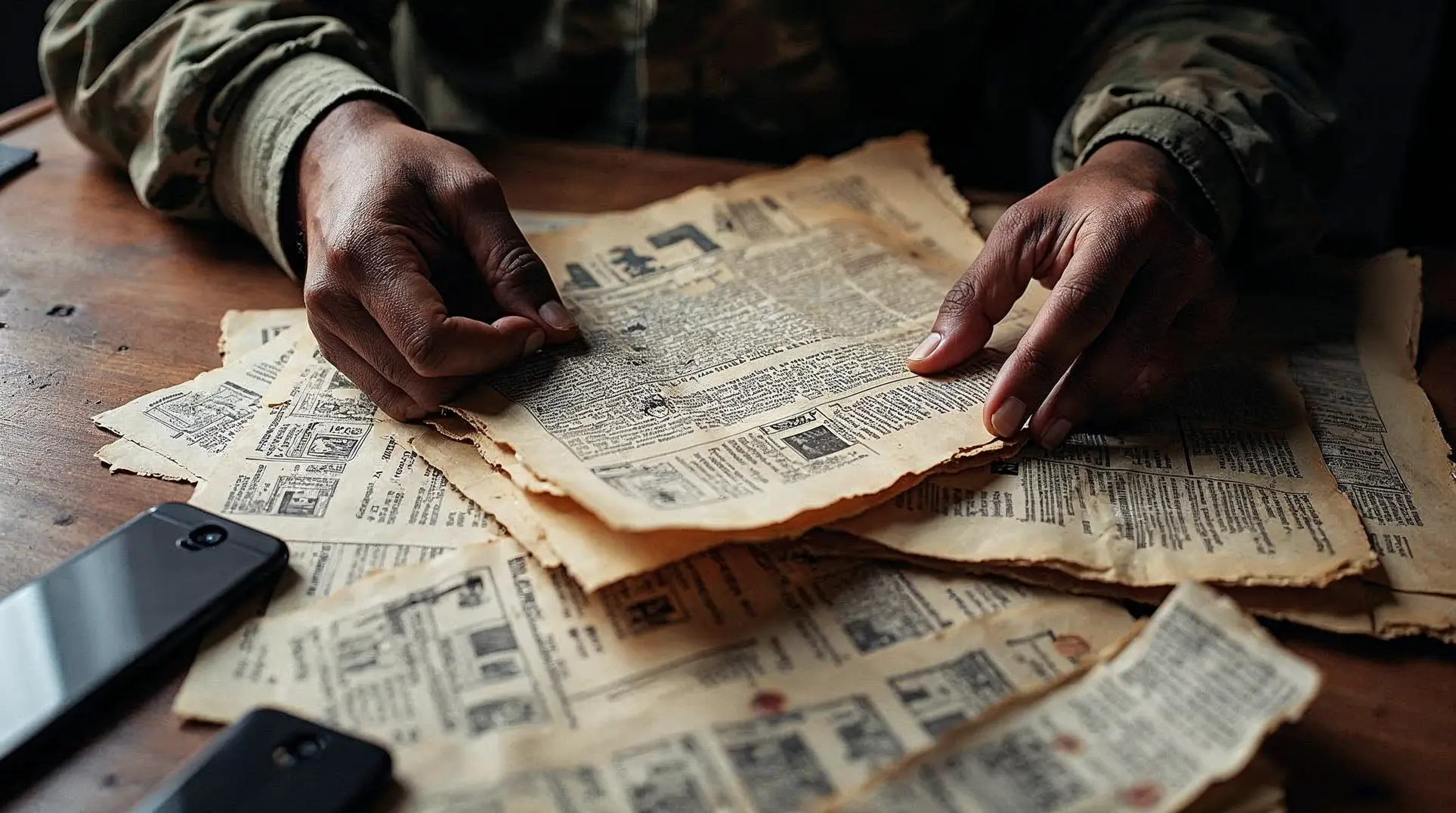
That same day, hooded armed men ransacked the commission's tabulation center. CNE official Idrissa Djalo told reporters that all regional tally sheets were destroyed except those from the capital, Bissau. The main results server was destroyed, and computers and phones belonging to 45 staff members were confiscated. Five Supreme Court judges present during the count were arrested. CNE president Mpabi Cabi was detained for five days before reappearing publicly. The commission's announcement this week did not identify the attackers.
By November 27, army chief General Horta Inta-a had been sworn in as transitional president, promising a one-year transition to elections. The transitional government he installed includes several figures aligned with the ousted president, according to AP reporting—a composition that has fueled skepticism about the junta's stated neutrality. Embaló was released following Senegalese mediation and fled first to Dakar, then to Brazzaville in the Republic of the Congo. Nigeria's government said President Bola Tinubu granted protection to Dias due to an "imminent threat to his life."
Members are reading: Why destroying tally sheets hands the junta unchecked power and sets a dangerous precedent for vetoing elections across West Africa.
ECOWAS under pressure, options narrow
The regional bloc faces a credibility test. On December 2, the same day the CNE briefed the ECOWAS delegation led by Sierra Leone's President Julius Maada Bio, the organization threatened sanctions and scheduled an emergency summit for December 14. But ECOWAS has struggled to reverse recent coups in Mali, Burkina Faso, and Niger—three countries that have since withdrawn from the bloc and formed their own alliance. Sanctions have proven slow and porous; military intervention remains politically unpalatable and logistically daunting.
The most plausible scenarios now are a transition period that stretches beyond one year, an annulled election followed by a managed re-run under military oversight, or the junta's consolidation into a civilian-led government in name only. Forensic reconstruction of the vote is implausible given the total loss of regional tallies. A credible re-run would require not only new ballots but a restoration of opposition access—PAIGC's exclusion remains unaddressed—and independent electoral oversight, conditions the junta has no incentive to accept.
What remains visible is the fragility of electoral governance when institutions lack enforcement power and regional bodies lack leverage. Guinea-Bissau's vote did not collapse solely because of the coup; it collapsed because the coup had the means and motive to erase the count, and no actor on the ground could stop it. The December 14 ECOWAS summit will reveal whether the bloc can offer anything beyond rhetoric. Until then, the transition timetable is whatever the junta says it is.
Subscribe to our free newsletter to unlock direct links to all sources used in this article.
We believe you deserve to verify everything we write. That's why we meticulously document every source.


