


Key takeaways
- Prime Minister Carney confirmed four Canadian service members died and dozens were seriously injured at CFB Wainwright on 17 October.
- Global News, citing military sources, reports a munition from a live training exercise may have sparked the fire; the military has not confirmed the cause, and officials had not publicly addressed the decision to proceed.
- The base holds more than 200 active gas wells within live-fire ranges; CAF and DND report no indications of terrorism.
Four Canadian service members were killed and dozens more seriously injured in a grass fire and explosions at Canadian Forces Base (CFB) Wainwright in east-central Alberta on Saturday, 17 October 2026, Prime Minister Mark Carney confirmed on Sunday. He said next of kin had been notified and called the event "one of the worst tragedies for the forces on Canadian soil in peacetime." Multiple military sources, Global News and CBC had earlier reported at least seven deaths. The confirmed figure is four.
The fire began at about 4:00 p.m. local time (22:00 GMT) during a live-fire combined arms exercise. Global News, citing multiple military sources, reported that a preliminary investigation suggests a munition from the live training exercise sparked a fast-moving grass fire. The military has not publicly confirmed the cause. It crossed the base boundary into the rural Municipal District of Wainwright No. 61 and was contained by about 11 p.m. or midnight, though a fire watch continues. The Royal Canadian Mounted Police (RCMP) is investigating the incident, CBC reported, citing McGuinty's remarks at a news conference. The Canadian Armed Forces (CAF) say they are working with emergency services, local authorities and other partners to support the response. CAF and the Department of National Defence (DND) said there are no indications of terrorism.
A live-fire range built around energy infrastructure
CFB Wainwright covers 609 square kilometres. It hosts the Canadian Manoeuvre Training Centre and trains mechanized units, including allied forces from the United States and the United Kingdom. It also contains more than 200 active natural gas wells and connected pipelines. These share the ground with artillery fire, armoured manoeuvres, livestock grazing and hunting.
Wind gusts reached 100 km/h on Saturday, and Environment Canada had warned of them. Military sources indicate that the fire or live munitions struck active energy infrastructure, either a gas line or a gas well. That has not been officially confirmed, and the cause remains under investigation.
Defence Minister David McGuinty said on Saturday that he "cannot recall an incident like this in recent memory." He described the situation and the investigation as "active and delicate." Soldiers from the Princess Patricia's Canadian Light Infantry (PPCLI) were among the personnel involved, along with reservists. By Sunday, 18 October, officials had not publicly addressed why live ammunition was being fired in those conditions. That is the central question the inquiry will face.
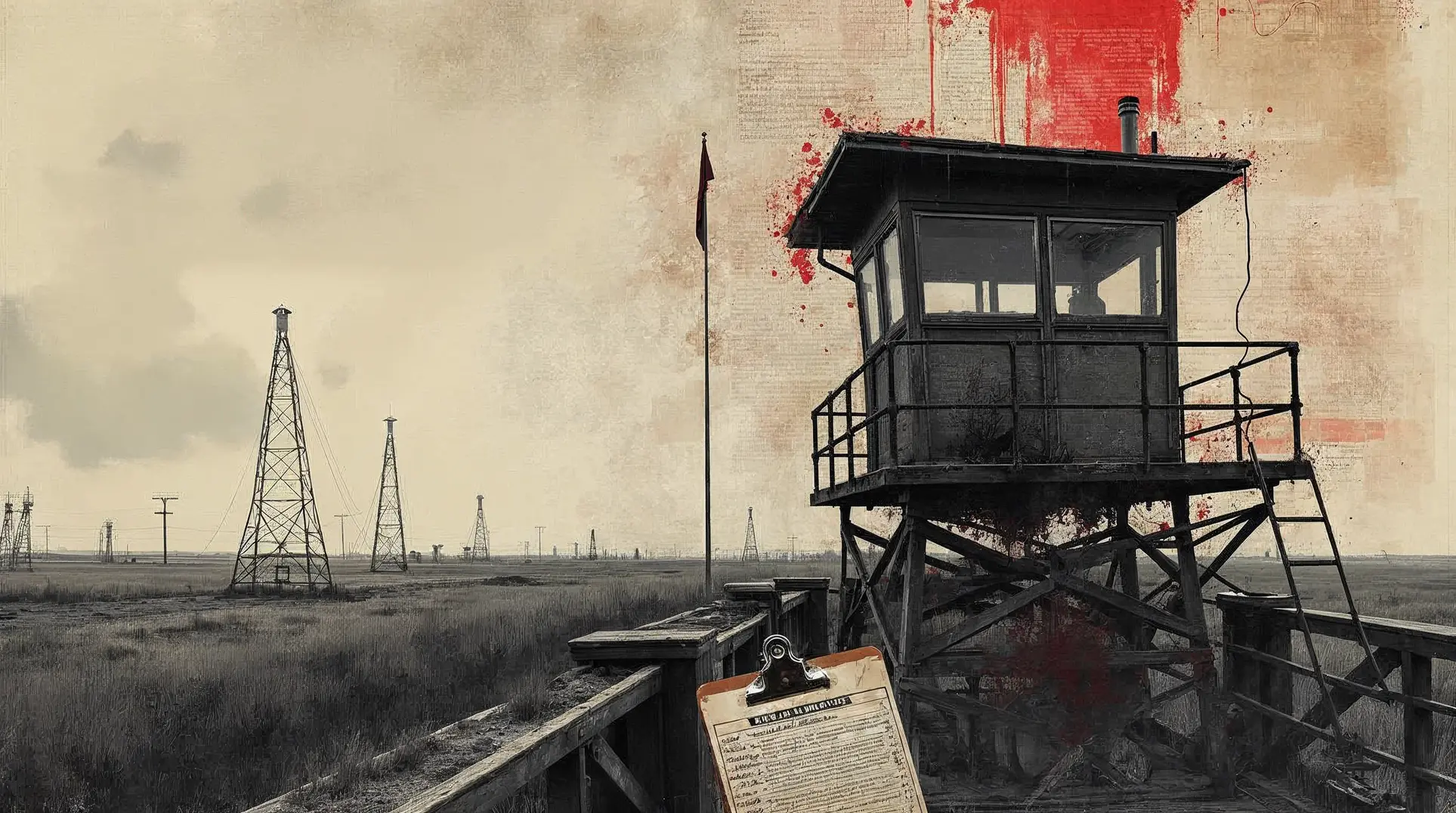
Observers are reading: the three decisions investigators must reconstruct to explain why live-fire training continued, and why Wainwright's earlier fatalities may not be a guide.
Become an Observer, it's free. Get full access to all Crisis.Zone analysis, briefings and breaking coverage.
What remains unconfirmed
Several points were unresolved on Sunday: the cause of the explosions, the decision to continue the exercise and the final casualty figures. Carney ordered federal flags flown at half-mast across the country. Adm. Giuseppe Cavo Dragone, chair of the NATO Military Committee, was reported to have offered condolences to the families of those killed at CFB Wainwright and wished the injured a full recovery, and to have noted Wainwright's role in allied combat training.
That role gives the inquiry weight beyond Alberta. Canada's army is expected to supply units for deterrence missions in Latvia, and allies are building out NATO's reinforcement structures for the Baltic region. Any findings on range safety at Wainwright may therefore bear on how training is conducted for those commitments. The CAF and RCMP have not given a timeline for their conclusions.
Become an Observer (it's free) to unlock direct links to all sources used in this article.
We believe you deserve to verify everything we write. That's why we meticulously document every source.


