


On 3 December 2025, Khaled Mohamed Ali El Hishri sat before three judges at the International Criminal Court in The Hague, becoming the first suspect brought into ICC custody in the Libya situation since the UN Security Council referred the file fourteen years ago. The 47-year-old confirmed his identity and date of birth before the bench, then asked judges to release him as proceedings move forward. The impassive exchange belied the gravity of what he faces: six counts of war crimes and six of crimes against humanity—murder, torture, rape, sexual violence, and persecution—allegedly committed at Tripoli's Mitiga Prison between 2015 and early 2020.
This initial appearance marks a pivotal moment for accountability in Libya, where detention facilities have become black sites of systematic abuse. El Hishri, described by prosecutors as one of the most senior officials at Mitiga and a member of the Special Deterrence Force (SDF/Al-Radaa) operating under Libya's Presidential Council, stands accused of criminal responsibility for crimes against thousands of detainees held for prolonged periods behind locked doors. His transfer from Germany—which arrested him in Berlin in July pursuant to the ICC warrant—demonstrates that when states fulfill their obligations to the Court, justice has a chance. Yet the case also exposes tensions over whose suffering will be legally recognized and how Libya's broader political deadlock continues to shelter perpetrators.
The Mitiga pattern: Detention as a site of systematic violence
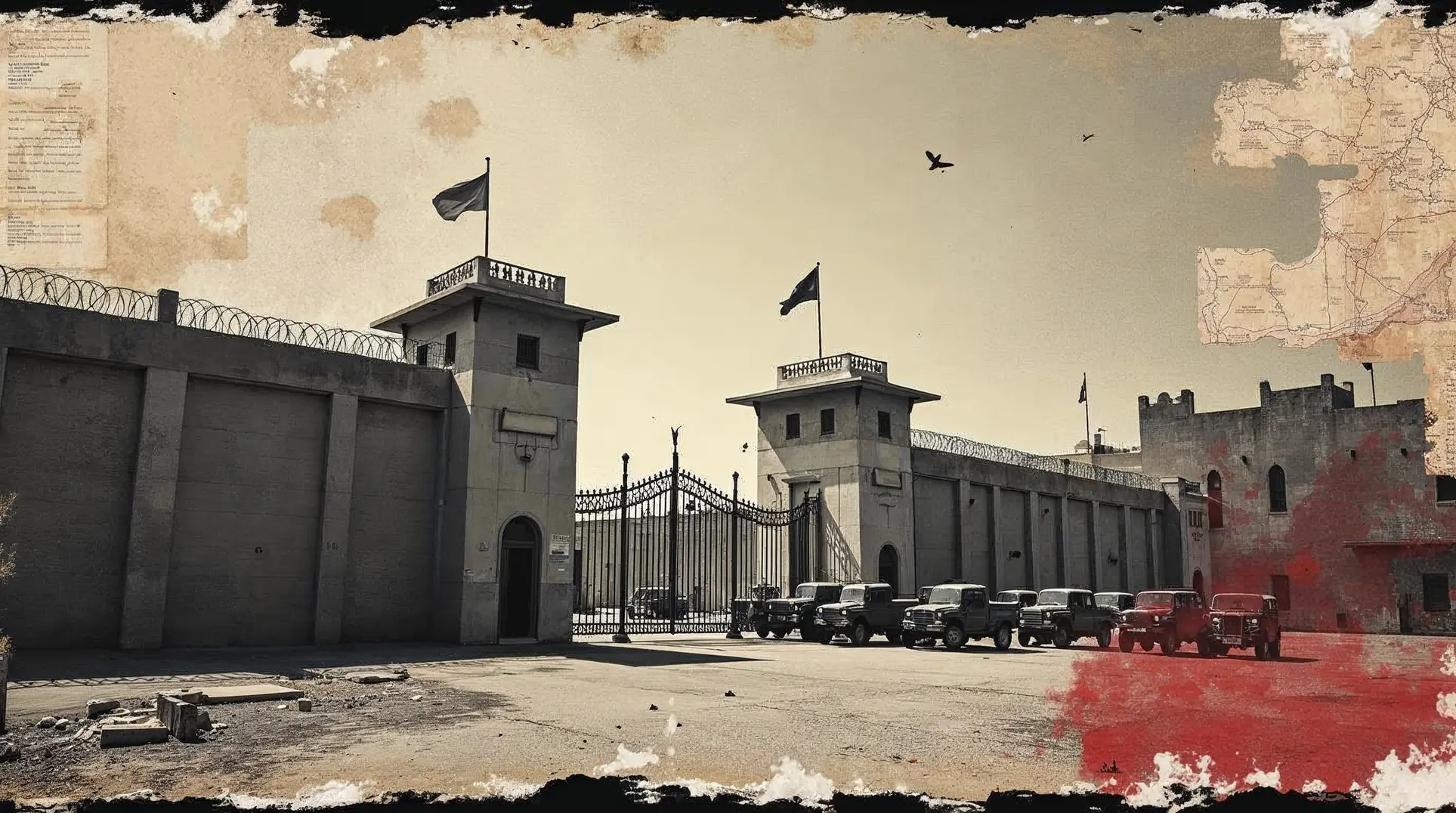
Mitiga Prison sits at the heart of Tripoli's contested security landscape. Originally a military airport, it has functioned as a detention facility controlled by various armed groups claiming state authority in Libya's fragmented governance system. Between February 2015 and early 2020—the period covered by the arrest warrant—the facility allegedly became a locus of systematic brutality under the control of the SDF/Al-Radaa, a militia that positioned itself as a counter-terrorism and organized crime unit within structures nominally loyal to the internationally recognized government.
The charges against El Hishri allege a pattern of conduct that goes beyond isolated incidents: thousands of detainees subjected to prolonged arbitrary detention, torture as a routine practice, sexual violence including rape, and killings. Prosecutors assert El Hishri bore criminal responsibility as a senior official overseeing these operations. The allegations reflect testimony and evidence gathered by the ICC's Office of the Prosecutor (OTP) as part of a deliberate investigative strategy to prioritize crimes in Libya's detention facilities—a focus that recognizes how these sites function as nodes of power and control for armed groups operating with impunity.
The legal pathway that brought El Hishri to The Hague runs through UN Security Council Resolution 1970, adopted in February 2011 as Muammar Gaddafi's forces crushed protests, which referred the Libya situation to the ICC despite Libya not being a party to the Rome Statute. That referral created obligations for Libya and all UN member states to cooperate with the Court. On 12 May 2025, Libya's authorities went further, accepting ICC jurisdiction under Article 12(3) from 2011 through the end of 2027—a step that theoretically reinforces cooperation duties even as enforcement remains fraught.
Members are reading: Why the legal framing may exclude racialized migrant victims, and what that reveals about international justice.
State cooperation: A tale of compliance and defiance
El Hishri's journey to The Hague underscores how ICC accountability depends entirely on state willingness. Germany arrested him on 16 July 2025 and surrendered him to the Court on 1 December, exemplifying robust cooperation. By contrast, Italy arrested another Mitiga suspect, Osama Elmasry Njeem, in January 2025 on an ICC warrant—then failed to surrender him, a breach the Court has formally confirmed. Njeem was subsequently reported arrested in Tripoli on 5 November 2025, with his surrender to the ICC still pending despite Libya's legal obligations.
Human Rights Watch and other organizations have called on Libyan authorities to hand over all suspects subject to ICC warrants, including Njeem and those connected to the Tarhuna mass graves case (warrants unsealed October 2024). Yet Libya's cooperation remains selective and politically contingent, shaped by shifting militia alliances and the reality that armed groups like the SDF/Al-Radaa continue to wield power on the ground, often with tacit or explicit backing from factions within Libya's divided government structures.
What comes next: Confirmation and the credibility test
Following Wednesday's initial appearance, the Prosecution will file the Document Containing the Charges, leading to a confirmation of charges hearing where Pre-Trial Chamber I—composed of judges Iulia Motoc (presiding), Reine Alapini-Gansou, and Socorro Flores Liera—will decide whether evidence is sufficient to commit the case to trial. This process typically unfolds over several months. El Hishri's defense has signaled it will seek provisional release; judges will weigh detention against risks to victims and witnesses, flight risk, and potential obstruction of justice.
For survivors of Mitiga and Libya's broader detention archipelago, the stakes extend beyond one man's trial. The El Hishri case represents the first test of the ICC's renewed detention-facility focus in Libya. If the charges reflect the full range of alleged crimes and all victim groups—including those racialized and marginalized as migrants—it could establish a meaningful accountability precedent. If the case proceeds with exclusions intact, it risks becoming another example of justice deferred for those the international system finds least convenient to see.
Libya's political fragmentation and the impunity shielding armed groups make every ICC proceeding a partial measure. But partial justice is only worth pursuing if it refuses to replicate the hierarchies that enabled the crimes in the first place.
Subscribe to our free newsletter to unlock direct links to all sources used in this article.
We believe you deserve to verify everything we write. That's why we meticulously document every source.


