


A drone struck the US-owned floating LNG terminal Energos Winter at Egypt's Damietta port on July 29, setting fire to a second vessel and marking the first confirmed hostile drone attack on Egyptian territory in the five-month US-Iran war. Egypt's cabinet confirmed on July 30 that "preliminary investigations by the relevant authorities found that the incident was caused by a drone," after initially describing only a fire aboard the Marshall Islands-flagged vessel.
The strike lands Egypt — a close US ally that had avoided direct military action throughout the conflict — inside a war it had largely watched from outside. Cairo's statement stressed that "no party has announced its responsibility," leaving the incident suspended between confirmed fact and unresolved attribution, a gap this piece is built to examine rather than fill.
What was hit, and who has not claimed it
The drone struck the starboard side of the Energos Winter, a US-owned regasification unit managed by Wilhelmsen Ship Management, before fire spread to the Bermuda-flagged Gaslog Salem. All crew evacuated; no injuries were reported, and both vessels were moved offshore for damage assessment. Houthi spokesmen explicitly denied involvement — notable chiefly because the group typically claims attacks rather than disowns them.
Two Iranian officials told The New York Times, speaking anonymously, that the strike was "designed to show that global shipping and energy supplies could be more deeply disrupted if Iran chose to escalate," without specifying who launched it. Asked directly whether Iran was responsible, President Trump said he had been briefed on the incident and implied that Iran or its proxies were behind it, without offering further detail. The strike arrives inside a compressed 48-hour cascade: Saudi Arabia intercepting drones from Iraq on July 27, Jordan downing Iranian missiles fired at a US airbase on July 28, and joint US-Saudi strikes killing at least 20 PMF fighters and six IRGC advisers across seven Iraqi provinces the same day.
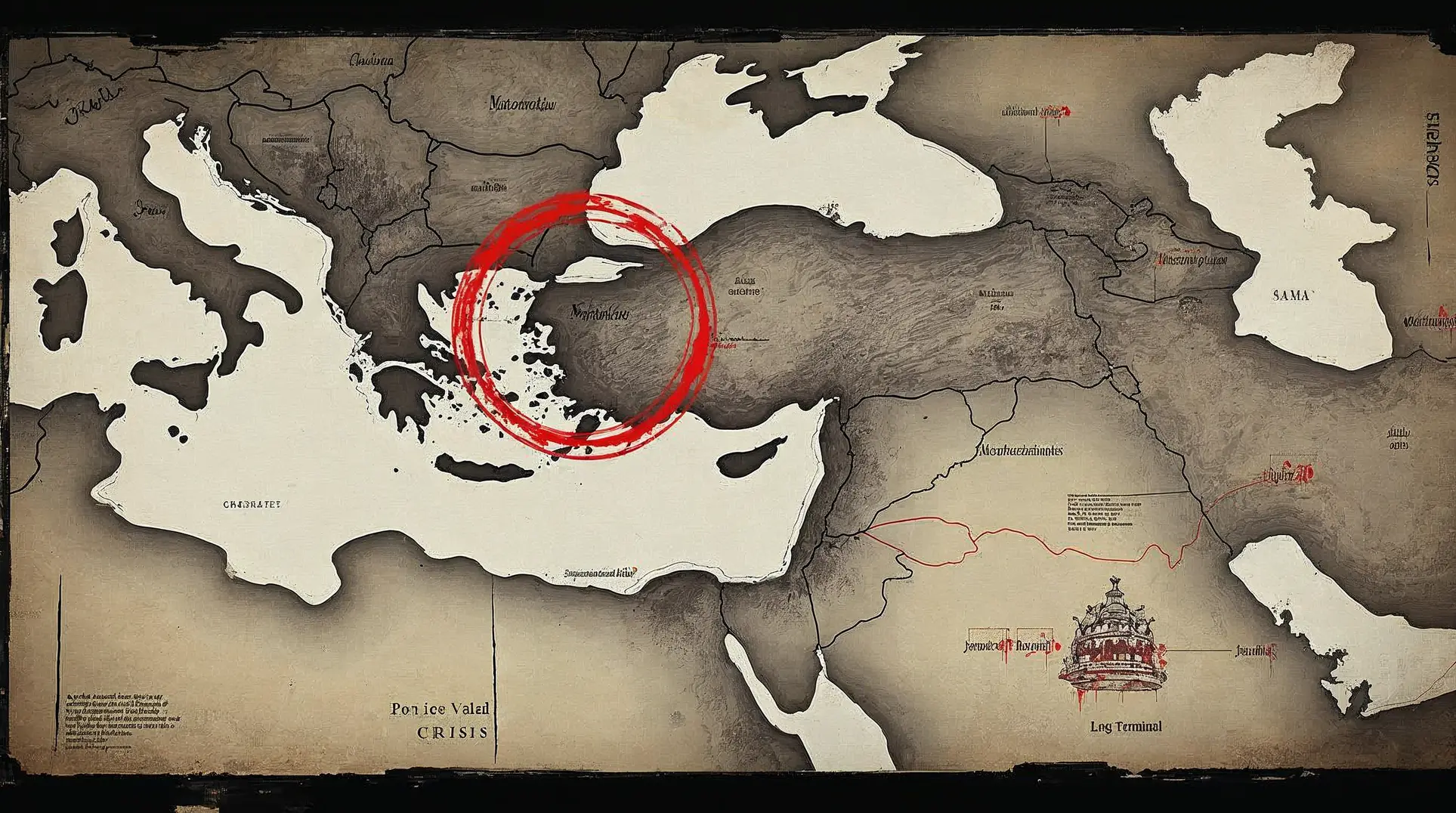
Observers are reading: why Cairo's response to Damietta will decide if the Mediterranean becomes the war's next front.
Become an Observer — it's free. Get full access to all Crisis.Zone analysis, briefings and breaking coverage.
An exception under strain
Egypt's regasification capacity loss is modest — the Energos Winter handles roughly 7% of daily national gas consumption, and alternative import routes exist. The significance lies elsewhere: an ally previously spared direct strikes now has to decide whether Damietta was a singular event or evidence that geography no longer shields it. That decision, still unmade as of this writing, will shape whether the Mediterranean joins Hormuz and the Red Sea as an active theater in the war.
Become an Observer — it's free — to unlock direct links to all sources used in this article.
We believe you deserve to verify everything we write. That's why we meticulously document every source.


