


Reuters' November investigation revealed China mobilizing civilian cargo ships and ferries for beach landings—a "shadow navy" that could multiply amphibious lift capacity far beyond dedicated military vessels. At the same time, the United States and Japan are establishing forward arming and refueling points (FARPs) on Yonaguni Island, Japan's westernmost territory, minutes from Taiwan's coast. The two developments represent mirrored strategic bets: Beijing is wagering on mass and speed across multiple landing sites, while the allies are betting on forward, distributed denial that can contest the critical first 72 hours of any assault.
The military logic is straightforward. China's dedicated PLA amphibious ships can lift roughly 20,000 troops in an initial wave—far short of the estimated 300,000 to over one million personnel analysts believe would be required to seize and hold Taiwan. Civilian hulls offer a capacity multiplier, and China's commercial shipbuilding industry—accounting for approximately 53 percent of global output—provides a vast reservoir. The question is whether these vessels can survive Taiwan's evolving asymmetric defenses and allied surveillance networks long enough to deliver decisive combat power ashore.
Rehearsing the beach
Reuters identified 12 civilian vessels—six roll-on/roll-off ferries and six deck cargo ships—moving to a beach near Jiesheng, Guangdong, in mid-August. Satellite images captured beach landing operations on August 23, showing vessels deploying ramps directly onto the sand and offloading equipment. A self-propelled floating pier system, not observed since 2023, reappeared in the exercise, suggesting portable infrastructure to enable rapid offload if ports are destroyed or contested.
Naval warfare experts interpret the drills as evidence of a multi-point, small-amphibious landing concept. Rather than concentrating forces at a few major ports or beaches, the PLA appears to be rehearsing simultaneous landings across numerous sites to overwhelm Taiwan's defenders and reduce the effectiveness of pre-positioned coastal defenses. The PLA holds legal authority to requisition civilian shipping during national emergencies, turning China's vast commercial fleet into a latent military asset.
Yet vulnerability is the counterargument. A senior Taiwan defense official noted that civilian ferries and cargo ships lack armor and are susceptible to shoulder-fired anti-tank and anti-ship missiles, mobile coastal artillery, and mines—precisely the asymmetric capabilities Taiwan has prioritized. Taiwan's Defense Minister Wellington Koo has publicly stated that Taipei continuously monitors PRC roll-on/roll-off ferry usage and maintains relevant contingency plans. The drills may also serve cognitive warfare purposes, projecting intimidation and testing Taiwan's psychological resilience as much as rehearsing actual operational technique.
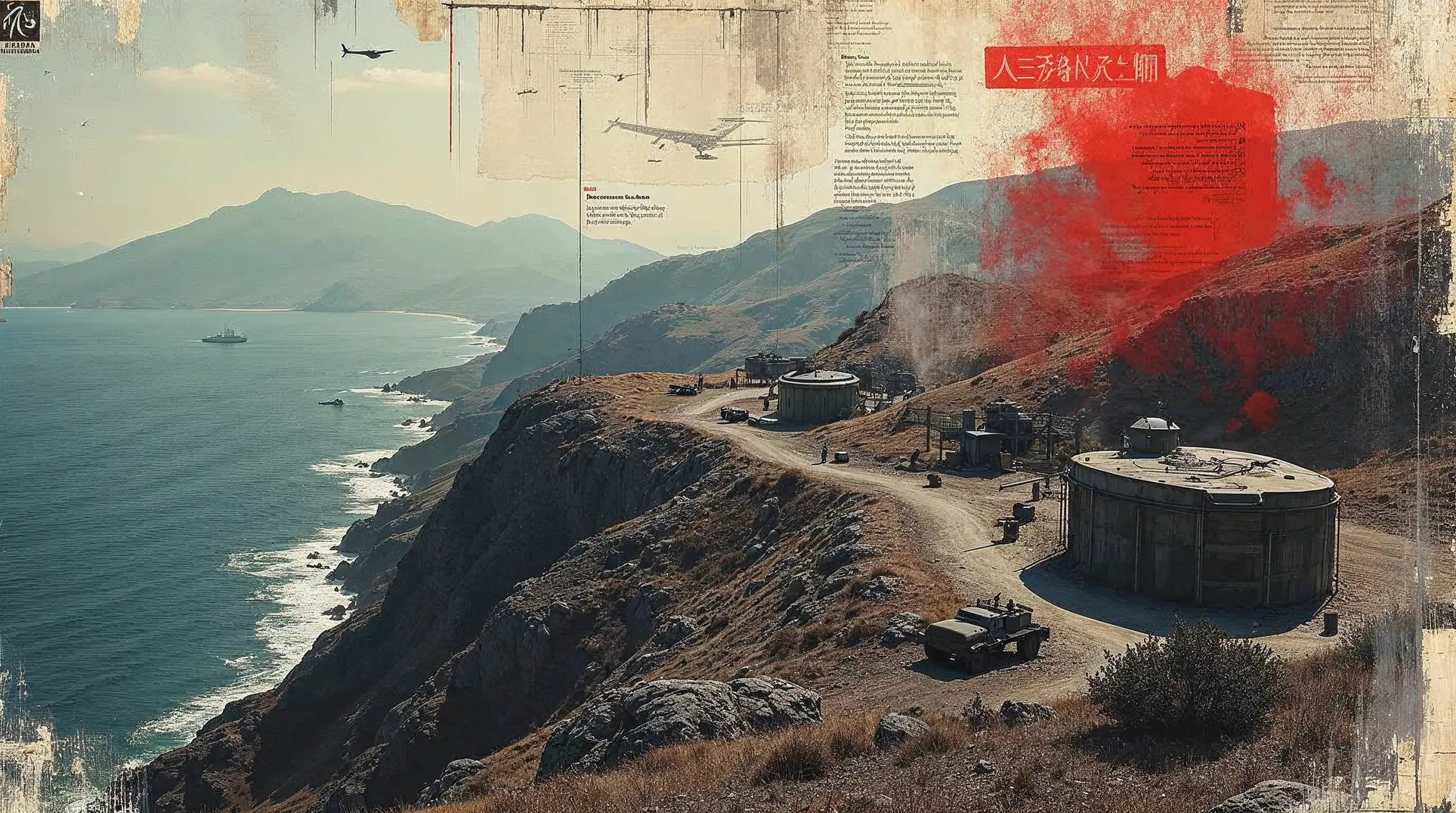
Members are reading: How U.S.-Japan forward arming points on Yonaguni aim to deny China's landing tempo and the survivability risks both sides face.
Pressure beyond the beach
Military rehearsals occur within a broader coercive framework. China has intensified diplomatic pressure aimed at isolating Taiwan and deterring Japanese involvement. Recent examples include Nauru severing ties with Taipei in 2024 and Honduras in 2023, part of Beijing's transactional playbook of incentives and pressure to shrink Taiwan's formal diplomatic footprint. Simultaneously, China has escalated military flights near Taiwan's airspace, conducted live-fire drills in and around the Taiwan Strait, and increased rhetoric on "reunification."
Japan faces parallel coercion. After Japanese officials explicitly linked Taiwan's security to Japan's survival, Beijing deployed economic and maritime tools: tourism-linked travel advisories, seafood import bans, China Coast Guard entries near the Senkaku Islands, and live-fire exercises near Japanese waters. The message is unambiguous: deeper Japanese involvement in a Taiwan contingency will carry costs beyond the military domain.
Techno-industrial policy adds another layer. The U.S. Congress is debating the GAIN AI Act as an amendment to the National Defense Authorization Act, which would prioritize domestic access to advanced AI chips and restrict exports. Amazon and Microsoft support stricter prioritization, citing national security; Nvidia warns it could constrain competitiveness. The White House has reportedly lobbied against inclusion, and reconciliation between Senate and House versions remains unresolved. The debate reflects broader efforts to limit PLA access to AI-enabled command, control, and logistics systems while preserving U.S. technological leadership and allied access.
What the indicators will show
Several observable trends will clarify whether either side's strategic bet is maturing. Watch for more frequent participation of civilian hulls in PLA drills, expanded deployment of floating pier systems, and exercises using additional beaches to test geographic dispersal. On the allied side, monitor FARP hardening efforts on Yonaguni and elsewhere, prepositioning drills, and survivability measures against missile and drone threats.
Political and economic indicators matter equally. Air defense identification zone violation patterns around Taiwan, PRC live-fire exercise windows, China Coast Guard activity near the Senkaku Islands, and the intensity of wolf-warrior diplomatic narratives targeting Japan will signal Beijing's willingness to escalate pressure. Congressional action on the GAIN AI Act and its implications for allied compute access and PRC supply chain constraints will shape the technological dimension of deterrence.
The Reuters investigation provides concrete evidence that Beijing is devising invasion plans and rehearsing techniques to overwhelm Taiwan's defenders through speed and distributed landings. Allied FARPs on Yonaguni represent a forward commitment to contest those timelines. Whether civilian ferries can survive Taiwan's asymmetric defenses, and whether forward bases can endure PRC long-range fires, will determine if either side's logistics gamble pays off in the most dangerous contingency in the Indo-Pacific.
Subscribe to our free newsletter to unlock direct links to all sources used in this article.
We believe you deserve to verify everything we write. That's why we meticulously document every source.


