


The Philippine Coast Guard's 97-meter flagship BRP Teresa Magbanua shadowed China Coast Guard vessel CCG 4305—a 134-meter cutter—near Scarborough Shoal on November 27–28, issuing radio challenges that accused the Chinese vessel of violating international law and the 2016 Arbitral Award. Beijing answered on November 29 with joint People's Liberation Army and Coast Guard "combat readiness" patrols around the shoal, framing the operation as defense of sovereignty and maritime rights. The face-off marks Scarborough's return as the primary friction point in the South China Sea, displacing the Second Thomas Shoal confrontations that dominated headlines through mid-2024.
What makes this latest encounter significant is not the rhetoric—both capitals have traded legal claims for years—but the operational pattern it reveals. China is systematically operationalizing a de facto enforcement boundary east of Scarborough Shoal aligned with its discredited nine-dash line, not the 12-nautical-mile territorial sea that UNCLOS would permit around a feature. Manila, constrained by a smaller fleet and competing domestic demands, must surge assets to specific incidents rather than maintain continuous presence. The result is a legal-operational mismatch that raises accident risk and slowly normalizes Chinese control without Beijing needing to build permanent facilities on the shoal itself.
The eastward shift in China's enforcement zone
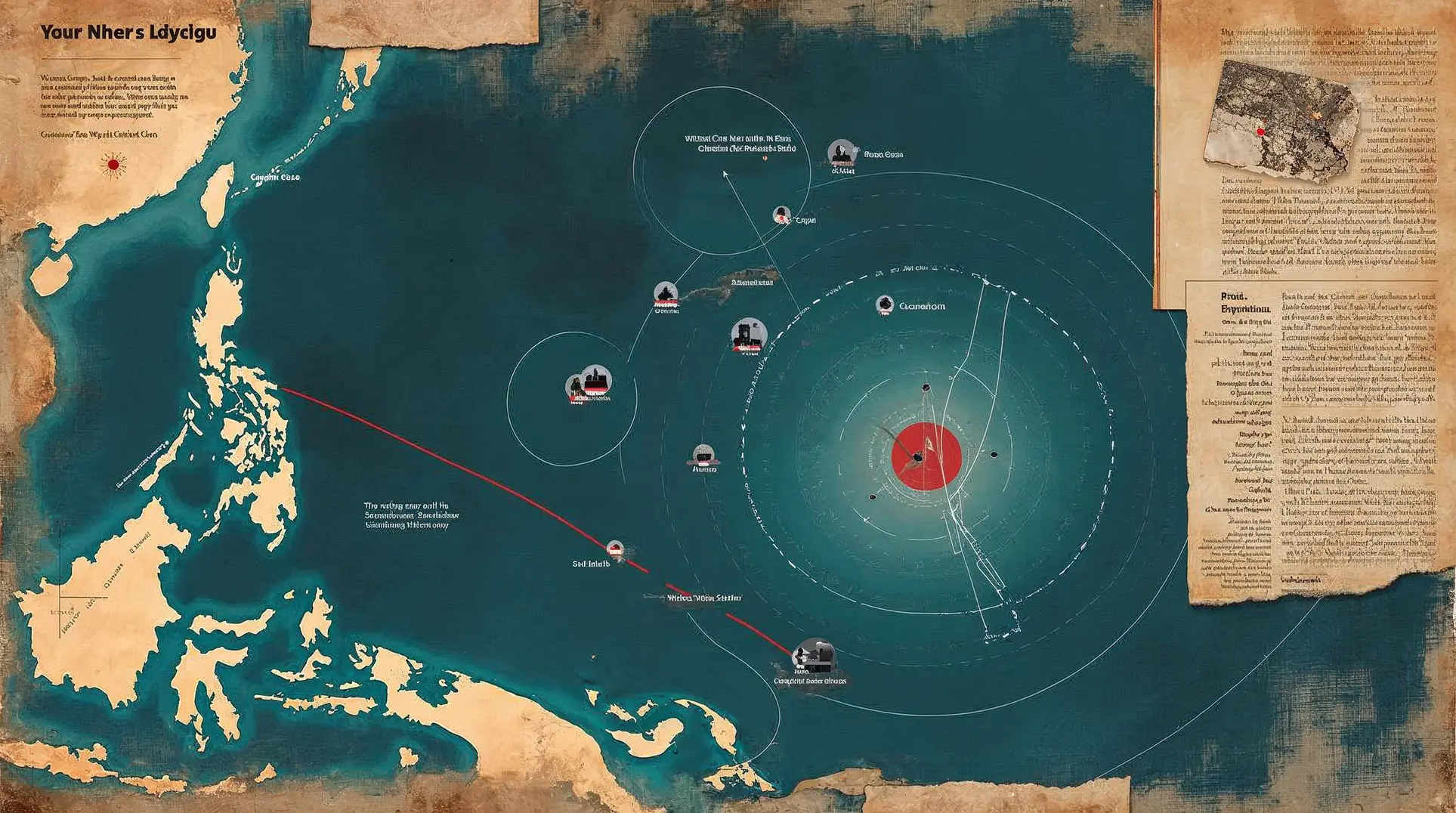
Scarborough Shoal lies roughly 120 nautical miles from Luzon, the Philippines' main island, and approximately 594 nautical miles from China's Hainan Island. The 2016 Arbitral Award under UNCLOS invalidated China's sweeping South China Sea claims, yet Beijing has rejected the ruling and maintained a permanent Coast Guard presence at Scarborough since seizing effective control in 2012. Recent data from the Asia Maritime Transparency Initiative covering August 2024 through May 2025 show China Coast Guard patrols averaging around 95 ship-days per month in early 2025—nearly double the roughly 48 ship-days per month recorded in the second half of 2024. January 2025 saw a peak of approximately 120 ship-days.
More telling than the volume is the geography. Chinese Coast Guard cutters have pushed their patrol pattern eastward from Scarborough, intercepting Philippine vessels in the 70-nautical-mile corridor between the shoal and the nine-dash line. This suggests Beijing's imagined enforcement boundary tracks the dash, not any feature-based territorial limit recognized under international law. PCG spokesperson Jay Tarriela reported Teresa Magbanua's position during the recent encounter as 42.77 nautical miles southeast of Bajo de Masinloc—the Philippine name for Scarborough—and 103.15 nautical miles southwest of Capones Island, Zambales. That location sits well within the zone where China now routinely intercepts, tracks, and warns vessels it deems engaged in "illegal" activity.
Maritime interactions between Chinese and Philippine government vessels were documented on 121 days during the August 2024–May 2025 period, with surges in January (29 days) and April (28 days). Aerial encounters, once rare, have also increased; Manila filed a formal complaint in August 2024 after a Chinese fighter jet dropped flares near a Philippine patrol aircraft. The growing tempo of sea and air encounters creates multiple vectors for an accident that could widen the crisis.
Members are reading: How China's "nature reserve" designation and persistent Coast Guard patrols create administrative control without construction, and why Manila's episodic surges cannot close the structural gap.
What the data says about escalation risk
The 121 documented interaction days and rising aerial encounters indicate that Scarborough is now the most active friction point in the South China Sea, even though confrontations there have not yet reached the intensity of the June 17, 2024 collision at Second Thomas Shoal. The difference is that Second Thomas involves a grounded Philippine Navy vessel with a permanent garrison, creating a fixed flashpoint. Scarborough is fluid: patrols come and go, fishermen operate intermittently, and each encounter's location and severity vary. This fluidity raises accident risk because neither side can predict where the next interaction will occur or what operational posture the other will adopt.
The key variables to monitor are whether the Philippine Coast Guard keeps Teresa Magbanua on station for extended periods, whether China begins enforcing "nature reserve" regulations against Filipino fishermen, and whether either capital establishes a hotline or incident-management protocol to prevent a routine escort from spiraling into a collision or weapons discharge. So far, no such mechanism is publicly evident. The legal-operational mismatch—China enforcing a line it draws, the Philippines asserting rights a tribunal affirmed—means every patrol is also a legal claim, and every radio challenge a reminder that the dispute has no agreed framework for resolution.
Subscribe to our free newsletter to unlock direct links to all sources used in this article.
We believe you deserve to verify everything we write. That's why we meticulously document every source.


