


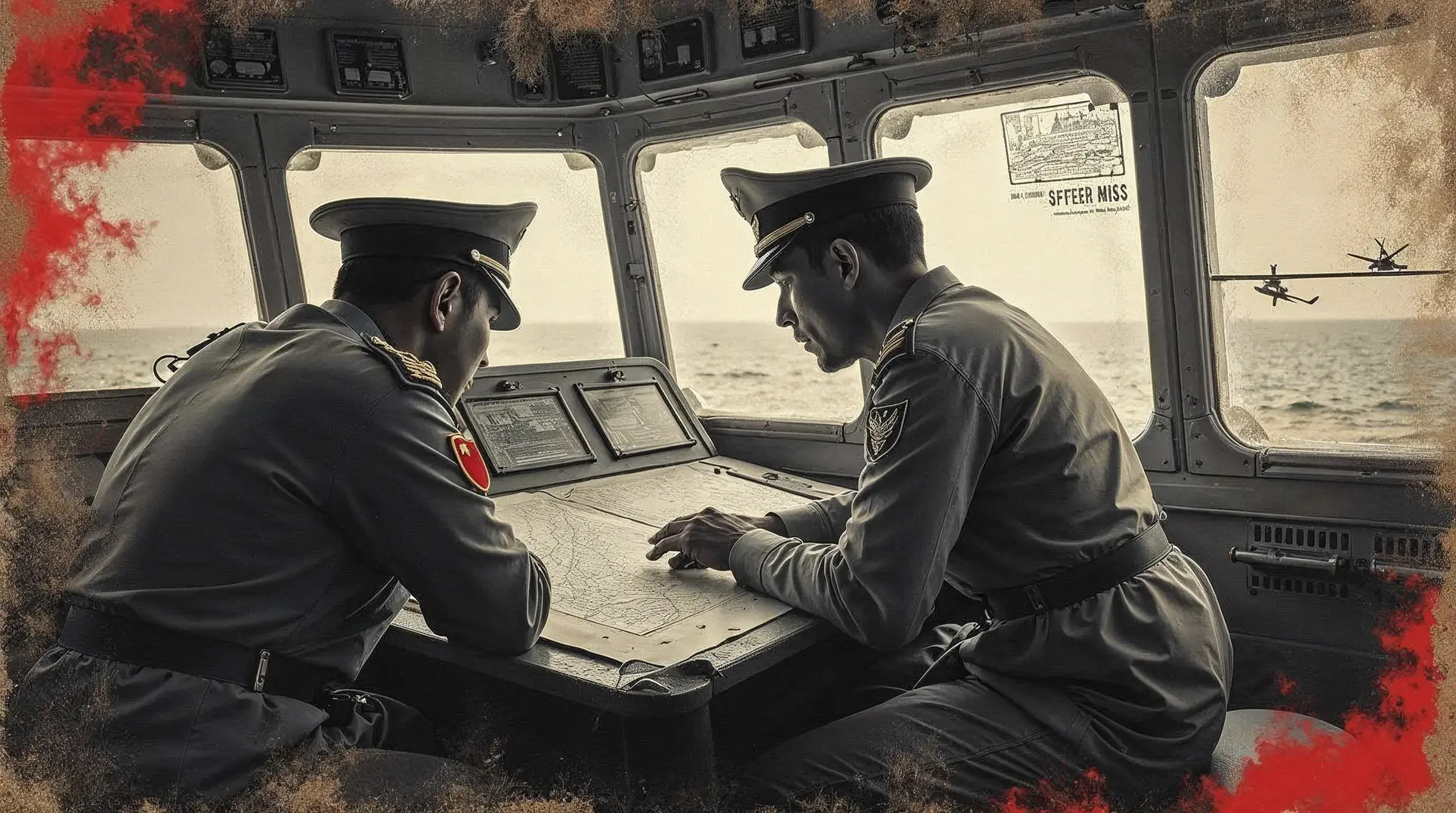
The People's Liberation Army Navy led a multi-day naval exercise off Cape Town this month, joined by Russian corvettes and Iranian warships in what Beijing has branded the "Will for Peace 2026" drills. The South African Navy participated alongside forces from three nations currently under varying degrees of Western sanctions, conducting maneuvers in waters traditionally dominated by NATO-aligned fleets. The exercise marks the first time Iran has participated as a full military partner in BRICS-hosted drills since its formal accession to the bloc.
This is not routine naval cooperation. The composition of forces, the geographic location, and the timing of these drills constitute a deliberate geopolitical statement. South Africa has chosen to host a Chinese-led security demonstration at precisely the moment when its relationship with Washington has reached a post-apartheid nadir. The drills reveal the fault lines of an emerging world order where middle powers must choose alignments, and where those choices carry immediate consequences.
The strategic calculation behind the invitation
Pretoria's decision to host these drills cannot be separated from the broader trajectory of US-South Africa relations under the Trump administration. The bilateral relationship has deteriorated sharply over the past year. Washington has imposed targeted tariffs on South African exports, implemented a controversial refugee policy explicitly prioritizing white South African applicants, and publicly accused Pretoria of material support for Russia's war effort in Ukraine. These are not minor diplomatic irritants; they represent a fundamental reassessment of South Africa's position in Washington's strategic calculus.
The ANC government's response has been to accelerate its pivot toward the BRICS framework. The naval drills are the military dimension of that pivot. By allowing Chinese warships to conduct exercises in the South Atlantic, South Africa signals that it will not modify its foreign policy orientation in response to American pressure. This is a high-stakes bet that the future international order will be genuinely multipolar, and that deepening ties with Beijing, Moscow, and Tehran will yield strategic dividends that offset the economic costs of Western displeasure.
The domestic political dimension matters here. The Democratic Alliance, South Africa's official opposition and coalition partner in the Government of National Unity, has publicly opposed the drills. The DA's criticism reflects the economic anxiety of constituencies integrated into Western markets and investment networks. The ANC's decision to proceed despite this opposition reveals the ideological commitment driving the strategy—a commitment rooted in Cold War-era solidarity with Moscow and post-colonial alignment with Beijing.
Members are reading: How the drills expose South Africa's strategic miscalculation and what China's Atlantic presence means for Western naval dominance.
The durability of Pretoria's gamble
South Africa's strategic wager confronts a hard structural reality. While Western economies like the United States and Germany rank among South Africa's major trading partners, Asia and Africa have emerged as the largest export destinations in recent years, with China, the United States, Germany, Mozambique, and the United Kingdom leading as export partners. Chinese investment has increased, but it has not fundamentally restructured South Africa's economic dependencies. If Washington chooses to impose more comprehensive economic pressure—enhanced tariffs, investment restrictions, or exclusion from preferential trade arrangements—Pretoria will face immediate fiscal and employment consequences.
The question is whether the ANC government has accurately assessed the strategic landscape. A multipolar world order is emerging, but its institutions remain nascent and untested. BRICS has no mutual defense mechanism, no integrated economic zone comparable to the EU single market, and no collective security architecture remotely resembling NATO. South Africa is betting on the promise of these structures against the demonstrated reality of Western economic power.
Realpolitik does not judge intentions; it measures capabilities and outcomes. South Africa has chosen to align with a bloc that offers ideological solidarity and the prospect of future strategic autonomy. Whether that choice yields security and prosperity, or merely accelerates economic isolation and strategic irrelevance, will depend on variables largely outside Pretoria's control—the trajectory of US-China competition, the durability of Russian and Iranian regimes, and the willingness of BRICS states to convert rhetorical solidarity into material support when South Africa faces economic pressure. The drills off Cape Town demonstrate commitment. They do not guarantee wisdom.
Subscribe to our free newsletter to unlock direct links to all sources used in this article.
We believe you deserve to verify everything we write. That's why we meticulously document every source.


