


The United Kingdom's decision to suspend intelligence sharing with the United States on suspected drug trafficking vessels in the Caribbean represents a calculated rebuke to Washington's expanding military strike campaign—and a rare public acknowledgment that allied legal assessments have diverged so fundamentally that cooperation risks British complicity in what London views as extrajudicial killings.
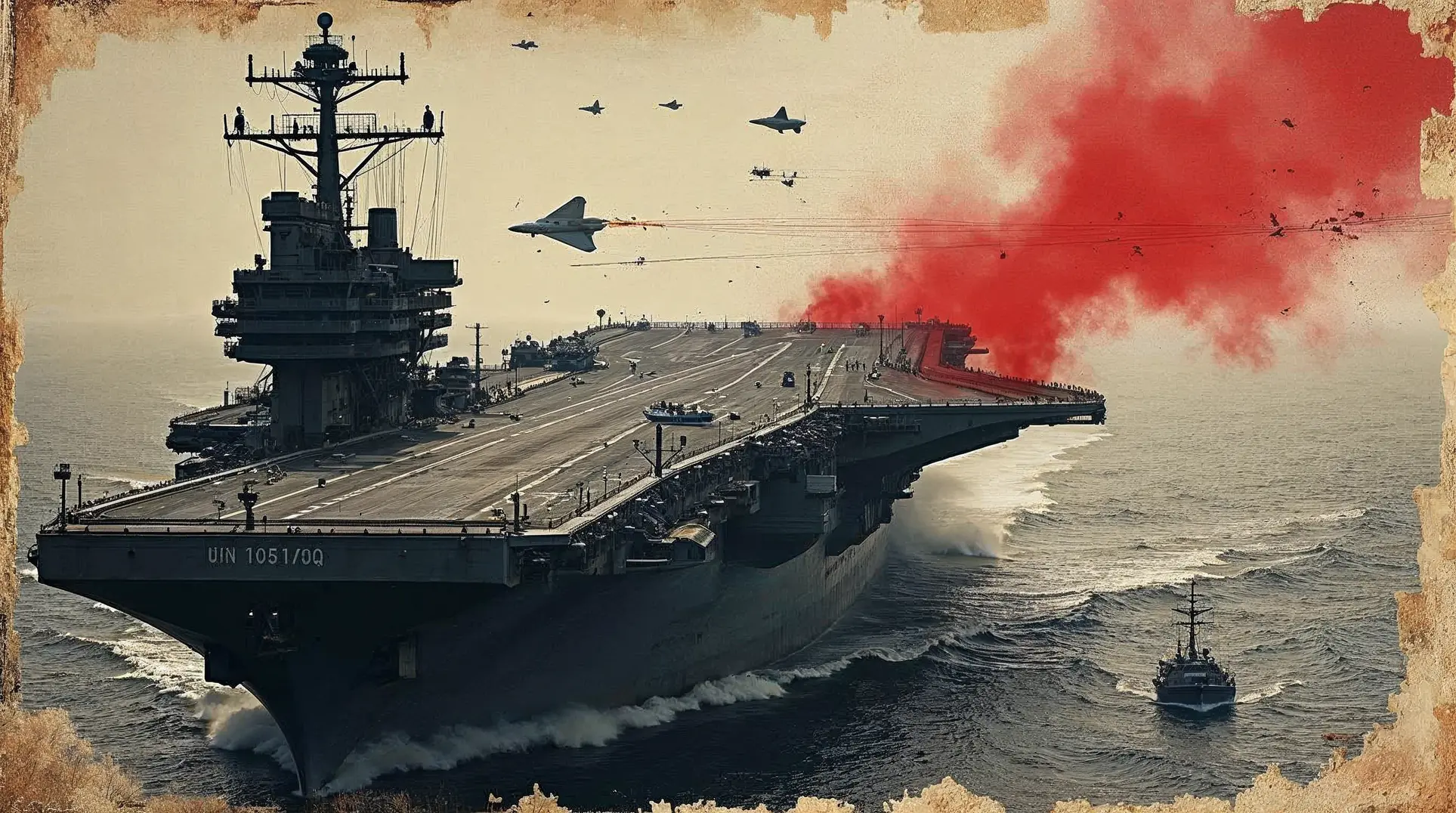
The intelligence suspension, quietly implemented since early October 2025, follows the Trump administration's escalation of counter-narcotics operations into what amounts to a naval assassination program. Since September, US forces have conducted between 14 and 19 lethal strikes resulting in at least 76 fatalities, transforming traditional law enforcement interdiction into what international legal experts, the UN human rights chief, and now close allies characterize as unlawful military engagement against non-state criminals.
The realist's dilemma: law versus power
From a realpolitik perspective, Britain's move illuminates a fundamental tension in transatlantic relations: when a dominant alliance partner pursues policies incompatible with international legal norms, secondary powers face the choice between complicity and confrontation. London has chosen a middle path—silent non-cooperation that preserves alliance structures while avoiding direct culpability.
The legal dispute centers on Washington's characterization of drug traffickers as "unlawful combatants" and "enemy combatants" posing threats under the Law of Armed Conflict—a designation that remains highly controversial and legally disputed among international law experts. This framing attempts to transpose counterterrorism legal architecture onto criminal enterprises operating commercial vessels, despite widespread legal challenges questioning whether drug trafficking alone fulfills criteria for armed conflict under international law. The US position requires accepting that narcotics transport constitutes armed conflict and that sinking vessels without attempting arrest meets proportionality standards, assertions that violate international humanitarian law according to human rights organizations and legal authorities worldwide.
Members are reading: How the Caribbean intelligence rupture establishes a dangerous precedent for transatlantic cooperation across all security domains.
The ineffectiveness multiplier
The operational justification for the strike campaign remains conspicuously absent from administration rhetoric. Decades of counter-narcotics experience demonstrate that supply-side interdiction—whether through seizure or destruction—produces no measurable impact on drug availability or pricing in consumer markets. Trafficking organizations possess sufficient redundancy, alternative routes, and profit margins to absorb interdiction losses as routine business costs.
Military strikes add lethality without enhancing effectiveness. Dead traffickers are immediately replaced; destroyed vessels are rapidly reconstituted from the estimated $32 billion annual cocaine trade. Meanwhile, the financial burden of carrier strike group deployments and precision munitions far exceeds any conceivable return on investment measured in narcotics interdicted.
The real strategic cost emerges in hemispheric relations. Latin American nations increasingly view US military operations in their periphery as sovereignty violations cloaked in counter-drug rhetoric—a perception reinforced when Washington characterizes commercial criminals as military targets. Brazil's opposition at CELAC-EU summits and broader regional resistance suggest the campaign undermines rather than advances American influence.
Subscribe to our free newsletter to unlock direct links to all sources used in this article.
We believe you deserve to verify everything we write. That's why we meticulously document every source.


