


President Trump's decision to dispatch the USS Abraham Lincoln carrier strike group toward Iranian waters, framed as a response to Tehran's violent suppression of nationwide protests, marks a significant escalation in the long-simmering confrontation between Washington and the Islamic Republic. The deployment, which Trump characterized with his characteristic bluntness as sending an "armada" that would be ready "just in case," comes as Iranian authorities face their most severe domestic legitimacy crisis in years. The Revolutionary Guard commander Mohammad Pakpour responded with matching defiance, declaring his forces "more ready than ever, finger on the trigger," while General Ali Abdollahi warned that all U.S. regional bases now sit within Iran's targeting range.
Yet beneath this choreographed escalation lies a revealing paradox that exposes the complex fault lines within the anti-Iran coalition. Prime Minister Benjamin Netanyahu, long portrayed as the most hawkish voice on Iran, has reportedly advised Trump against direct military strikes on Iranian facilities. This recommendation, confirmed by multiple Israeli defense sources, suggests Jerusalem's strategic calculus has evolved in unexpected directions. While the Israel Defense Forces have elevated their alert posture and reinforced northern defensive positions, the political leadership appears to favor containment of a weakened regime over the uncertain consequences of its collapse. This divergence between American coercive diplomacy and Israeli calculated caution reveals fundamental disagreements about threat assessment, escalation dynamics, and the preferred regional order.
The domestic crisis driving Tehran's defiance
Iran's current external posture cannot be separated from its internal upheaval. The protests that have engulfed Iranian cities represent the most sustained challenge to the regime since the 2009 Green Movement, driven by a convergence of economic collapse, political repression, and generational frustration. Official government figures acknowledge approximately 3,100 deaths in the security crackdown, while international human rights organizations place the toll above 5,000, with tens of thousands detained. The Islamic Revolutionary Guard Corps, which bore primary responsibility for suppressing the demonstrations, has consistently framed the unrest as foreign-orchestrated subversion, specifically citing U.S. and Israeli intelligence operations.
This narrative of external threat serves multiple purposes for Tehran's leadership. It provides ideological coherence to a crackdown that might otherwise appear as naked repression of legitimate grievances. It rallies the regime's core constituents—the IRGC, Basij paramilitary forces, and ideologically committed elements of the population—around a familiar storyline of resistance against imperialism. And crucially, it creates a domestic political imperative for the regime to project strength externally, even as it confronts weakness internally.
The timing of Trump's naval deployment thus plays directly into this dynamic. From the regime's perspective, the U.S. armada validates its claims that the protests were merely the opening phase of a broader destabilization campaign. Commander Pakpour's "finger on the trigger" rhetoric, while primarily directed at external audiences, also signals to domestic constituencies that the IRGC remains capable of defending the revolution despite its role in killing thousands of Iranian citizens. This dual-audience messaging complicates Western assessments of Iranian intentions and resolve.
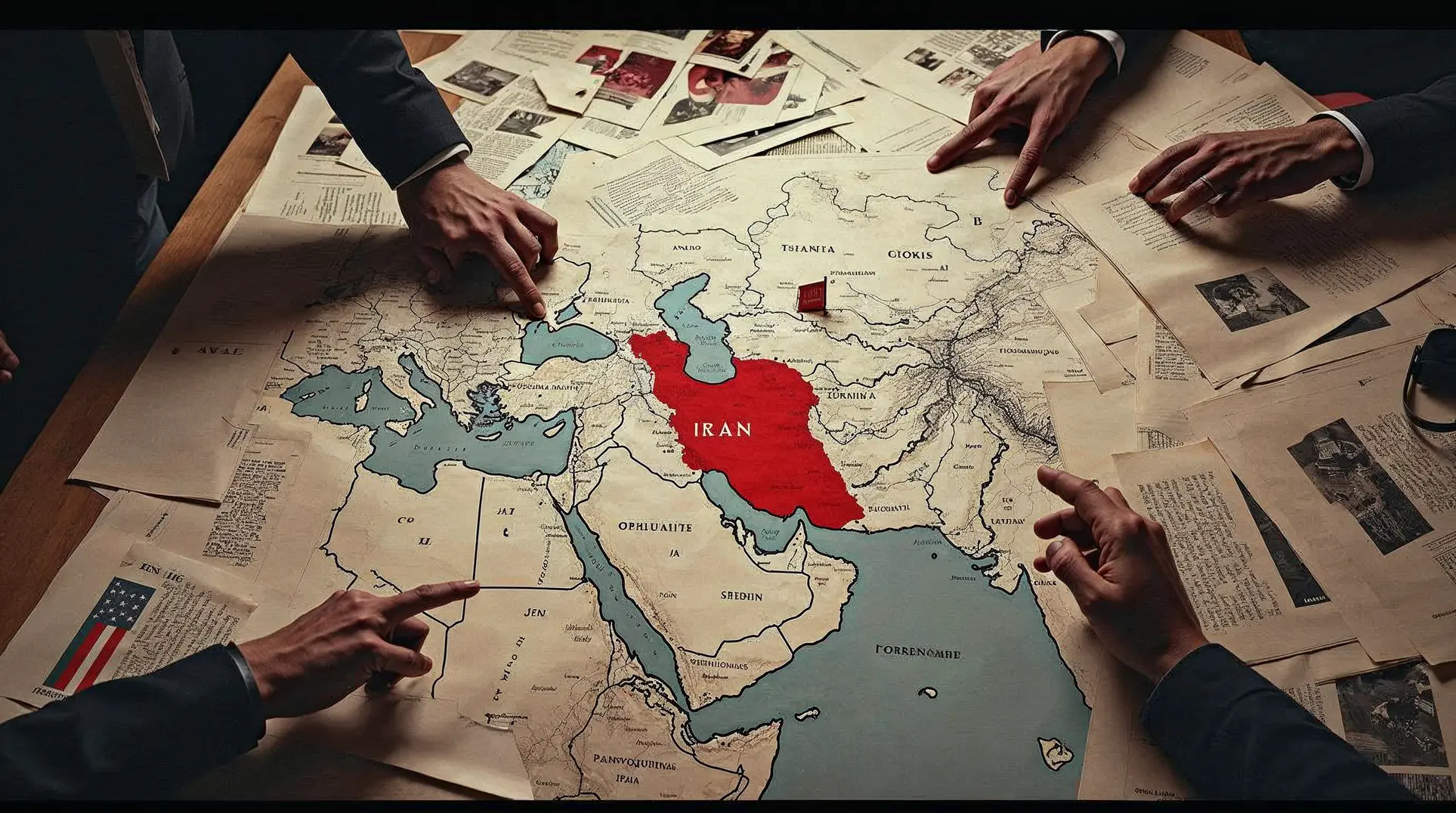
Members are reading: The three strategic imperatives driving Netanyahu's unexpected restraint—from escalation fears to the "known devil" calculus that redefines Israeli threat assessment.
Washington's coercive diplomacy calculus
The Trump administration's deployment of naval assets represents the latest iteration of what officials characterize as "maximum pressure" strategy, though the relationship between military positioning and diplomatic objectives remains ambiguous. Trump's own statements have oscillated between bellicose threats and expressions of willingness to negotiate, creating interpretive challenges for both adversaries and allies attempting to discern American intentions.
The carrier strike group deployment serves multiple signaling functions simultaneously. To domestic audiences, particularly Trump's political base, it projects strength and decisiveness in response to Iranian actions—both the protest crackdown and the regime's broader defiance of U.S. demands. To regional allies, particularly Gulf Arab states that have urged greater American security commitments, it demonstrates continued engagement despite broader trends toward reduced U.S. military presence in the Middle East. To Iran, it creates a credible threat of military action while stopping short of irreversible commitments.
Defense officials, speaking on background, describe the deployment as creating "options" for presidential decision-making rather than representing a predetermined course toward conflict. This optionality serves the administration's approach of maintaining ambiguity about red lines and response thresholds. Yet this same ambiguity generates the conditions for miscalculation and unintended escalation, particularly when Iranian decision-makers must assess U.S. intentions amid their own domestic crisis and the institutional imperatives of the IRGC to project strength.
Iran's threat projection amid internal weakness
General Abdollahi's statement identifying all U.S. regional bases as potential targets represents standard Iranian deterrence messaging, yet the current context imbues such declarations with greater significance. Iran maintains short and medium-range ballistic missile capabilities sufficient to strike targets across the Gulf region, demonstrated during the January 2020 attack on Al Asad airbase in Iraq following the killing of Qassem Soleimani. The precision and restraint shown in that strike—causing no fatalities despite hitting specific structures—revealed both capability and, crucially, the regime's capacity for calculated responses rather than reflexive escalation.
The question confronting Western intelligence assessments centers on whether the current crisis has altered this calculus. The regime's domestic vulnerability, combined with the potential for Trump to authorize strikes significantly more devastating than previous limited operations, may push Iranian decision-making toward more desperate calculations. A leadership facing existential internal challenges might conclude that demonstrating external strength through dramatic military action provides the only path to domestic survival, even if such action triggers responses that ultimately worsen Iran's strategic position.
Iranian state media has prominently featured military exercises and weapons displays in recent weeks, imagery designed for both external and internal consumption. The focus on missile capabilities and naval assets reflects Iran's asymmetric strategy—unable to match U.S. conventional military power directly, Tehran invests in capabilities designed to impose costs that Washington might find unacceptable: mining or mining-threat to the Strait of Hormuz, missile strikes against oil infrastructure in Gulf states, activation of proxy forces across the region.
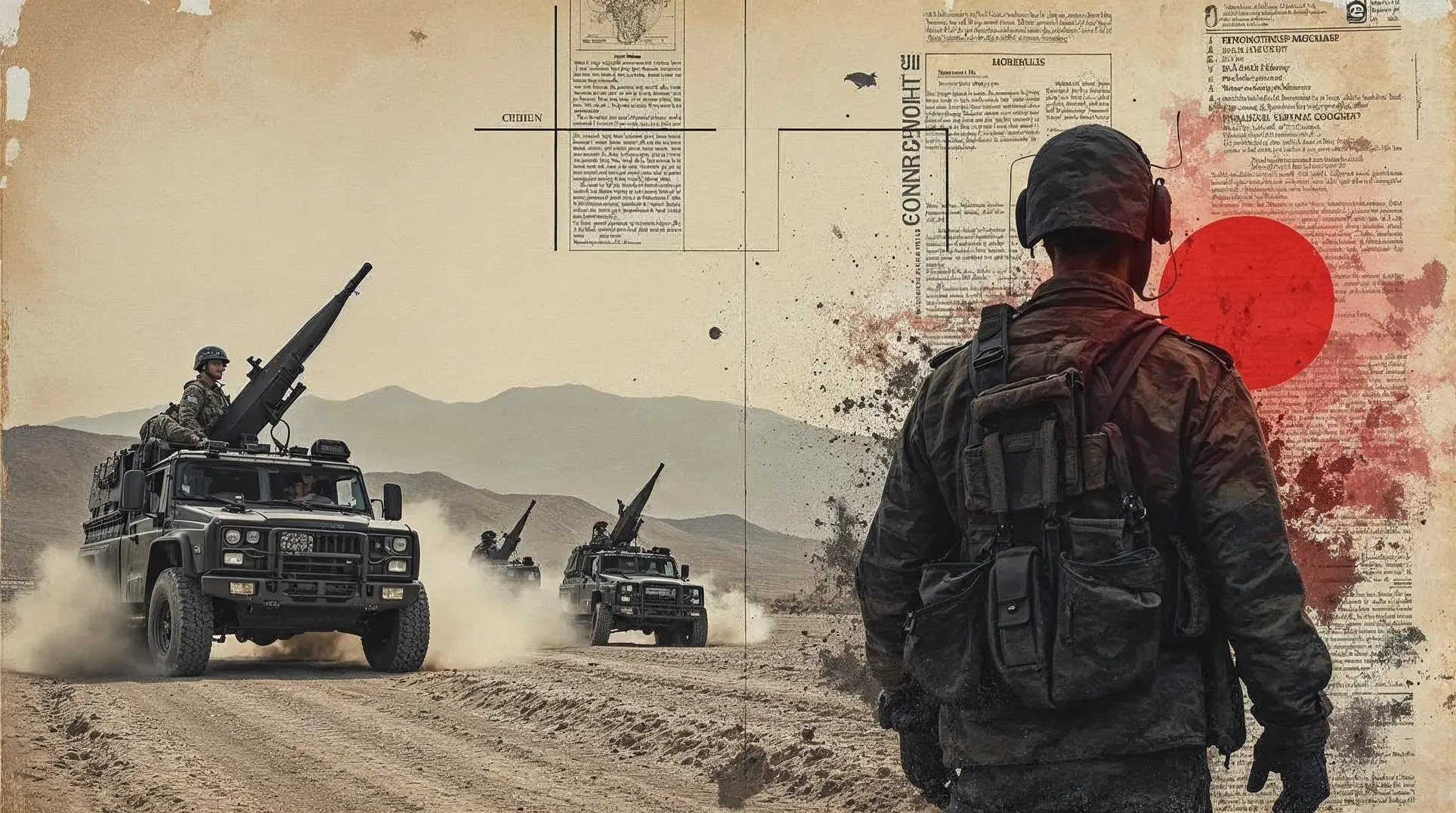
Members are reading: How the security dilemma's inexorable logic is driving escalation neither Washington nor Tehran desires, and why both may be misreading their own deterrent success.
Regional powers navigate the crisis
The U.S.-Iranian confrontation unfolds within a regional context that shapes both the crisis dynamics and available resolution pathways. Gulf Arab states, particularly the United Arab Emirates and Oman, have reportedly communicated to both Washington and Tehran their concerns about escalation that could devastate regional economies regardless of the military outcome. The memory of the September 2019 attacks on Saudi oil facilities—which removed approximately five percent of global oil production overnight—demonstrates the economic vulnerability that would accompany broader conflict.
Russia has positioned itself as a potential mediator, with Foreign Minister Sergei Lavrov publicly offering Moscow's services to facilitate dialogue. This reflects both Russian interests in preventing U.S. military action that could reshape regional balances and Moscow's broader strategic competition with Washington for influence. Yet Russian credibility as an honest broker remains limited given its military coordination with Iran in Syria and its consistent diplomatic support for Tehran in international forums.
China, though less publicly engaged, maintains substantial economic interests in both Gulf Arab states and Iran. Chinese firms are among the few still conducting significant trade with Iran despite U.S. sanctions, and Beijing has positioned itself as Tehran's most important economic partner for post-sanctions recovery. Simultaneously, Gulf states represent crucial markets for Chinese exports and investment destinations for Belt and Road infrastructure projects. Beijing's preference for regional stability reflects these balanced interests, though China shows little inclination toward active mediation that could jeopardize relationships with either side.
Members are reading: Israeli intelligence's three-scenario forecast through the coming weeks, with the calibration challenge that makes limited strikes the most dangerous option of all.
The divergence that defines the crisis
The fundamental tension exposed by this crisis extends beyond immediate tactical questions of strikes and responses to reveal deeper fractures in the Western approach to Iran. Washington's framework appears to remain anchored in coercive diplomacy aimed at either forcing major Iranian concessions or creating conditions for regime change. Jerusalem's framework has evolved toward containment of a weakened adversary whose collapse might generate worse outcomes than its survival.
This divergence reflects differing geographies of consequence. The United States can contemplate military action against Iran while maintaining the option of strategic disengagement from the region if outcomes prove unsatisfactory or costs excessive. Israel possesses no comparable option—it must live indefinitely with whatever regional order emerges from this crisis. This difference in stakes generates different risk tolerances and time horizons for strategic planning.
The carrier strike group continues its transit toward the Gulf, a fact that constrains decision-making timelines and creates pressure for resolution. Ships cannot maintain heightened alert posture indefinitely; deployments generate internal momentum toward action or withdrawal, and withdrawal without achieving stated objectives carries political costs that may incentivize escalation. Iranian forces maintain their elevated readiness status, similarly creating organizational pressures for either action or stand-down.
Conclusion
The paradox of U.S. forward deployment coupled with Israeli counsel for restraint reveals the complex calculus confronting Western strategy toward Iran at a moment of multiple, intersecting crises. Trump's armada projects power while Netanyahu's caution reflects accumulated wisdom about regional dynamics that often confound external intervention. The question is whether Washington's decision-making incorporates these lessons or proceeds along a path whose consequences Israel will bear regardless of American choices.
The coming weeks will determine whether mutual deterrence holds, whether limited conflict remains contained, or whether miscalculation triggers the broader confrontation that most regional actors—including, notably, Israel—seek to avoid. The protests that sparked this crisis have receded from international attention but continue to shape Iranian decision-making about external posture and internal repression. The regime's vulnerability generates both the possibility of accommodation and the danger of desperate escalation. In this environment, the divergence between American and Israeli assessments represents not merely a tactical disagreement but a fundamental difference in how the two allies calculate risk, value stability, and define success in one of the world's most volatile regions.
Subscribe to our free newsletter to unlock direct links to all sources used in this article.
We believe you deserve to verify everything we write. That's why we meticulously document every source.


