


- October prison assault demonstrated Al-Shabaab's capacity to strike central Mogadishu despite international counterterrorism efforts
- Al-Shabaab reversed 2022-2023 territorial gains throughout 2025, exploiting federal-state political fractures
- AUSSOM and UNTMIS face uncertain financing and contested transition timelines threatening security architecture
On October 4, 2025, Al-Shabaab militants launched a brazen assault on the Godka Jilacow high-security prison in Mogadishu, just blocks from Somalia's presidential palace. The attack began with a suicide car bomb disguised as a National Intelligence and Security Agency (NISA) vehicle, followed by gunmen dressed as Somali security forces attempting to breach the facility and free imprisoned militants. After a six-hour siege, Somali government forces killed all seven attackers, preventing any prisoner escapes. Yet the attack's proximity to the seat of government and its sophisticated execution underscored a troubling reality: despite years of counterterrorism efforts and billions in international support, Al-Shabaab retains the capacity to strike at the heart of Somalia's capital.
The assault came as the United States urged the international community to increase support for Somalia's counterterrorism fight at an October 8 UN Security Council meeting. U.S. Acting Deputy Representative John Kelley told the Council that "Somalia's security situation remains precarious and requires robust international cooperation." The timing was particularly significant—just days after the prison attack and amid growing evidence that Al-Shabaab has been reversing government territorial gains achieved during the 2022-2023 offensive. Since early 2025, the group has recaptured strategic towns in Middle and Lower Shabelle regions and parts of Hiiraan, exploiting political divisions between Somalia's federal government and regional states.
As Somalia transitions its UN political mission and grapples with uncertain funding for African Union security forces, one question looms: Can the fragmented Somali state sustain its fight against an adaptive insurgency that has proven more resilient than any military campaign against it?
The anatomy of a symbolic assault
The October 4 attack on Godka Jilacow prison was notable not just for its audacity but for its execution. According to reports, Al-Shabaab operatives obtained or replicated a NISA vehicle, allowing the suicide bomber to approach the prison without immediate suspicion. The attackers wore uniforms resembling Somali security forces, a tactic the group has employed with increasing sophistication to penetrate government-controlled areas.The African Union issued a firm condemnation of the attack, which targeted a detention facility housing suspected Al-Shabaab members. The choice of target was deliberate—prisons holding militants have long been strategic objectives for the group, both to free operatives and to demonstrate the government's inability to secure even its most sensitive facilities. The proximity to the presidential palace added symbolic weight, sending a message that no location in Mogadishu is beyond Al-Shabaab's reach.
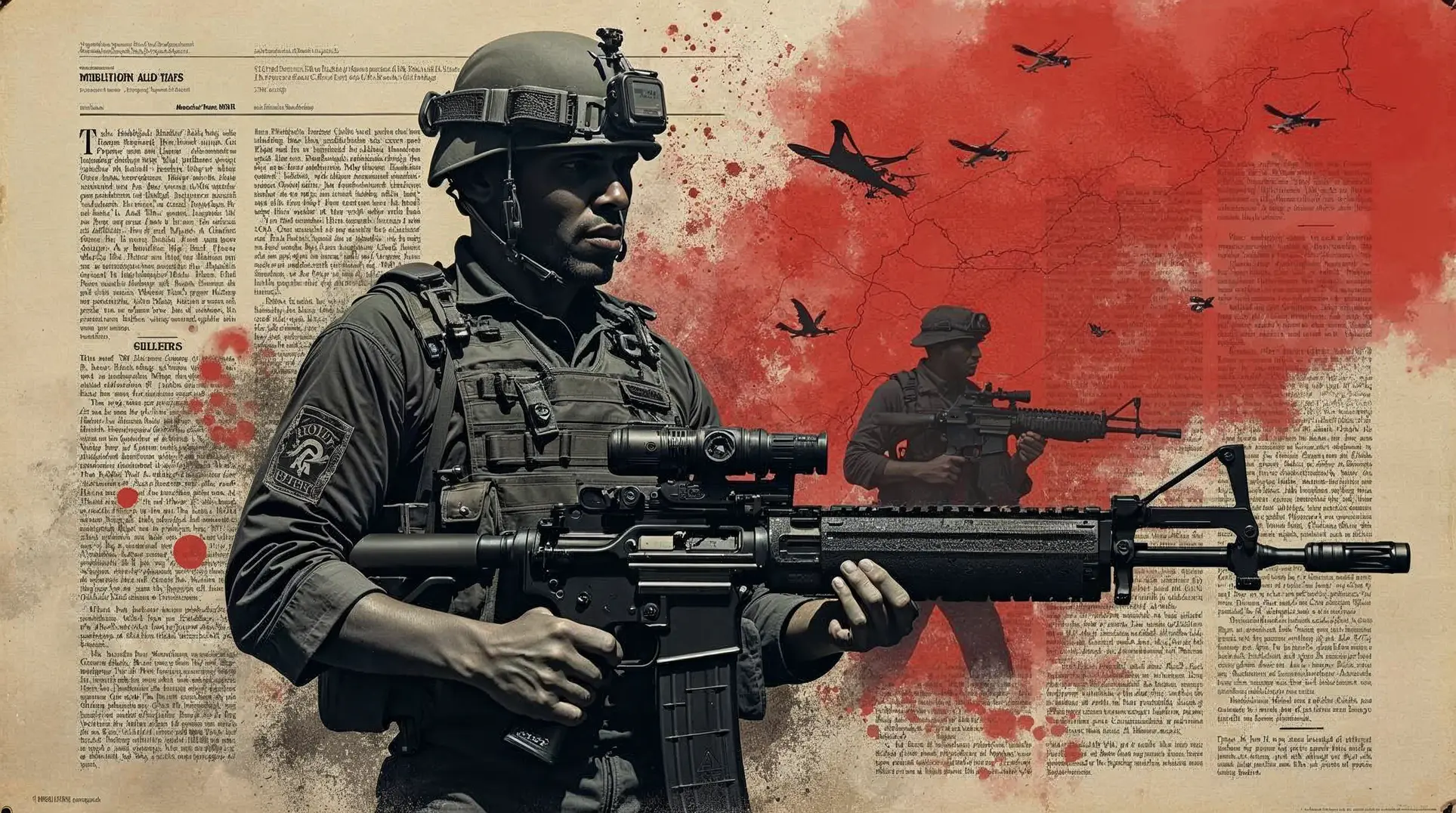
Inside intelligence reveals the prison attack was months in planning, exposed devastating infiltration within Somalia's security forces, and was strategically timed to sabotage UN transition talks—discover the multi-front strategy creating a psychological siege of Mogadishu
The successful defense of the prison, while preventing the worst-case scenario of a mass prisoner escape, came at a cost. The prolonged firefight in a densely populated area of Mogadishu highlighted the persistent threat Al-Shabaab poses to civilian populations. In 2024 alone, improvised explosive devices—Al-Shabaab's weapon of choice—caused more than 1,400 casualties across Somalia, according to UN Mine Action Service data.
Territorial gains reversed: Al-Shabaab's 2025 resurgence
The Mogadishu prison attack did not occur in isolation. It was the most visible manifestation of a broader Al-Shabaab resurgence that has been building throughout 2025, reversing much of the progress made during the Somali government's 2022-2023 offensive.Since launching a coordinated offensive in early 2025, Al-Shabaab has regained significant ground in Middle and Lower Shabelle regions and parts of Hiiraan. In July 2025, the group attacked the towns of Sabiid and Anole in Lower Shabelle, following a vehicle-borne improvised explosive device (VBIED) attack on Ugandan troops serving with the African Union Support and Stabilization Mission in Somalia (AUSSOM). Media reports indicated that approximately 20 Ugandan soldiers were killed in the attack—the second deadly bombing targeting Ugandan forces in the area within weeks.
Also in July, Al-Shabaab militants captured the towns of Moqokori and Tardo in Hirshabelle state, reportedly without resistance after Somali security forces and allied clan militias withdrew. Later that month, militants took control of Mahaas in Hiiraan, a key government outpost that had served as an important hub in operations against the group in central Somalia.The Somali National Army has launched multiple retaliatory operations aimed at repelling militants and reclaiming strategic areas. On August 1, AUSSOM forces, in coordination with Somali troops, recaptured Bariire town in Lower Shabelle following a week-long ground offensive that reportedly killed more than 100 militants. However, these tactical victories have not reversed Al-Shabaab's overall momentum.
U.S. Africa Command (AFRICOM) airstrikes targeting Al-Shabaab militants have increased significantly since the beginning of 2025. The White House announced in May that a U.S. military operation killed 10 militants, bringing the total number of insurgent casualties to "over 100" since the start of the Trump administration. However, AFRICOM has primarily focused its 2025 counterterrorism efforts on Islamic State cells in northern Puntland, conducting over 30 strikes against suspected IS positions while fewer than two dozen targeted Al-Shabaab in central and southern Somalia.
Political fragmentation undermines military gains
The deteriorating security situation cannot be separated from Somalia's increasingly fractured political landscape. Ongoing tensions between the Federal Government of Somalia (FGS) and federal member states—particularly Puntland and Jubaland—have undermined coordination and weakened counterterrorism efforts.
In early October, Somali President Hassan Sheikh Mohamud met with Jubaland President Ahmed Madobe in Kismayo for fence-mending talks amid escalating tensions over electoral processes and federal-state relations. The talks ended without concrete agreements, reflecting deep divisions around the government's push to shift to a "one person, one vote" electoral model planned for 2026.These political disputes have direct operational consequences. In May 2025, several opposition figures and political leaders established the Somali Salvation Forum (SSF), led by former President Sharif Sheikh Ahmed, positioning itself as a platform to push for reforms in response to concerns over governance and federal-state tensions. After several rounds of talks without breakthrough on constitutional reforms, differences over the electoral framework led to a splinter faction. On August 25, President Mohamud and the splinter faction signed an electoral framework agreement committing to universal suffrage elections, but the agreement was not supported by Puntland and Jubaland.
A National Consultative Forum convened in Mogadishu from June 16-19 addressed counterterrorism, constitutional reform, and elections, but was boycotted by Puntland, Jubaland, and the Somali Salvation Forum—exposing persistent fractures that Al-Shabaab has proven adept at exploiting.
Leaked intelligence exposes how Al-Shabaab weaponized Somalia's constitutional crisis, convinced clan militias to stand down with unprecedented concessions, and exploited the toxic federal power struggle that Western diplomats warn is sliding toward authoritarian rule
Mission uncertainty and the financing crisisAs Somalia faces renewed insurgent pressure and political division, uncertainty looms over the international security architecture designed to support the country's stabilization.
The UN Security Council held a private meeting on October 8 to discuss Somalia, with briefings from Special Representative James Swan, AUSSOM representatives, and the Chair of the Al-Shabaab Sanctions Committee. The meeting focused on security challenges, political developments, and plans for UNTMIS transition—the UN political mission authorized to hand over responsibilities to Somali institutions and the UN Country Team by October 31, 2026.Resolution 2753, which established UNTMIS's transition timeline, expressed the Council's intention to review progress by October 31, 2025. However, significant disagreements exist among Council members about the pace and conditions of the transition. African members, joined by China and Russia, favor a firm two-year timeline, while the United States prefers a "condition-based" approach that allows ground realities to determine the exit strategy.
The African Union Support and Stabilization Mission in Somalia (AUSSOM), which replaced the AU Transition Mission in Somalia (ATMIS) on January 1, 2025, faces its own existential challenges. The AU Peace and Security Council decided in July that all AUSSOM forces, including Burundian troops initially scheduled for repatriation, would remain eligible for UN logistical support through December 2025 pending full deployment of all troop-contributing countries.However, sustainable financing remains elusive. Resolution 2719, passed in December 2023, established a framework for financing AU-led peace support operations, but its implementation for Somalia has stalled amid U.S. opposition. Senator James Risch, Chairman of the U.S. Senate Foreign Relations Committee, posted in February 2025 that the resolution "should not be used to finance AUSSOM," arguing it "would lock the US into perpetual funding through its dues to the UN."
At the October Security Council meeting, AU Chairperson Mahmoud Ali Youssouf noted that the AU had doubled its contribution to the Peace Fund to $20 million but urged international partners to match Africa's effort. "Without urgent, predictable and sustainable financing, hard-won achievements risk being undone," he warned.
The counterterrorism response: strategy and gaps
Despite the challenges, Somalia and its international partners have maintained counterterrorism pressure on Al-Shabaab through multiple channels.On October 7, 2025, Somali intelligence forces, with support from international partners, carried out a targeted operation in the Basra area of Middle Shabelle region, killing seven Al-Shabaab members including senior commanders, with three others wounded. NISA described the operation as a "successful mission" that significantly disrupted Al-Shabaab's plots in the region.U.S. Africa Command has conducted multiple airstrikes in coordination with the Federal Government of Somalia. On September 9, AFRICOM conducted strikes in the Shabelle Region, and on May 17, airstrikes occurred approximately 200 kilometers north of Mogadishu near Mabaax. AFRICOM stated that "Al Shabaab has proven both its will and capability to attack U.S. forces," and emphasized its commitment to degrading the group's ability to plan and conduct attacks threatening the U.S. homeland and American citizens abroad.
In September 2025, Somalia launched a national strategy to counter improvised explosive devices, emphasizing interagency collaboration and public education. At the launch event in Mogadishu, UN Special Representative James Swan stated: "This Strategy is the product of Somali leadership, developed with determination and foresight. It builds on the Baseline Assessment launched in February 2023, which provided the foundation for this nationally owned framework to address one of the most persistent threats to Somalia's security and stability."National Security Advisor Awes Hagi Yusuf Ahmed described the strategy as representing "a decisive shift from reactive measures to a proactive, intelligence-led approach anchored in national ownership." The strategy integrates intelligence-led operations, precursor control, capacity building, legal reform, and civilian engagement, and establishes a national electronic tracking system for precursor materials.
Through the UN Mine Action Service (UNMAS), international partners have trained and equipped 61 Explosive Ordnance Disposal teams from the Somali National Army and 21 teams from the Somali Police Force since 2021. However, implementation of the counter-IED strategy faces significant resource constraints and coordination challenges.
Looking ahead: can Somalia reverse the trajectory?
Somalia stands at a critical juncture. The October 4 prison attack in Mogadishu, combined with Al-Shabaab's territorial gains throughout 2025, demonstrates that the group remains a potent force despite years of military pressure. The insurgency has proven remarkably resilient, exploiting political divisions, adapting tactically, and maintaining financial strength as Al-Qaeda's wealthiest affiliate.
The international security architecture supporting Somalia faces an uncertain future. UNTMIS is on a contested transition timeline, with fundamental disagreements between Somalia's push for national ownership and Western concerns about premature withdrawal. AUSSOM operates without guaranteed long-term financing, raising the specter of a security vacuum that Al-Shabaab could exploit. The UN-AU consultations scheduled for October in Addis Ababa may provide an opportunity to align financing frameworks, but political will remains uncertain.
Meanwhile, Somalia's domestic political crisis shows no signs of resolution. The 2026 elections loom as a potential flashpoint, with Puntland and Jubaland rejecting the federal government's electoral framework. Without political compromise between the federal government, member states, and opposition stakeholders, military gains against Al-Shabaab will remain fragile and reversible.
The group's October assault on Godka Jilacow prison may not have freed any prisoners, but it achieved something perhaps more valuable: it demonstrated that after nearly two decades of international intervention, billions in security assistance, and countless military operations, Al-Shabaab retains the capacity to strike at the symbolic heart of the Somali state. Until Somalia's political class can forge a genuine consensus on governance and security, that capacity is unlikely to diminish—and may well grow stronger.


