


When opposition leader Issa Tchiroma Bakary announced Friday that soldiers had escorted him to a "secure location" for his protection, he didn't just signal his personal safety concerns. He potentially announced the beginning of Cameroon's most dangerous political moment in decades: a crack within the very institution that has sustained Paul Biya's 42-year rule. For a continent where military loyalty determines who governs far more than ballot boxes ever have, this development transforms a disputed election into an existential question about state cohesion.
The claim comes amid violent protests across Yaoundé, Garoua, Douala, and Bafoussam following Biya's declaration of victory for an eighth term at age 92. Security forces have reportedly killed protesters and arrested hundreds, prompting France and the EU to issue concerned statements calling for dialogue. But these international appeals miss the fundamental shift: Tchiroma is not merely contesting election results or organizing street demonstrations. By publicizing military protection—by naming soldiers as his "loyalists"—he is either revealing or attempting to create a split in the coercive apparatus that has been Cameroon's true source of political stability since independence.
The question is no longer whether Cameroon faces a constitutional crisis. It is whether the country faces an armed one.
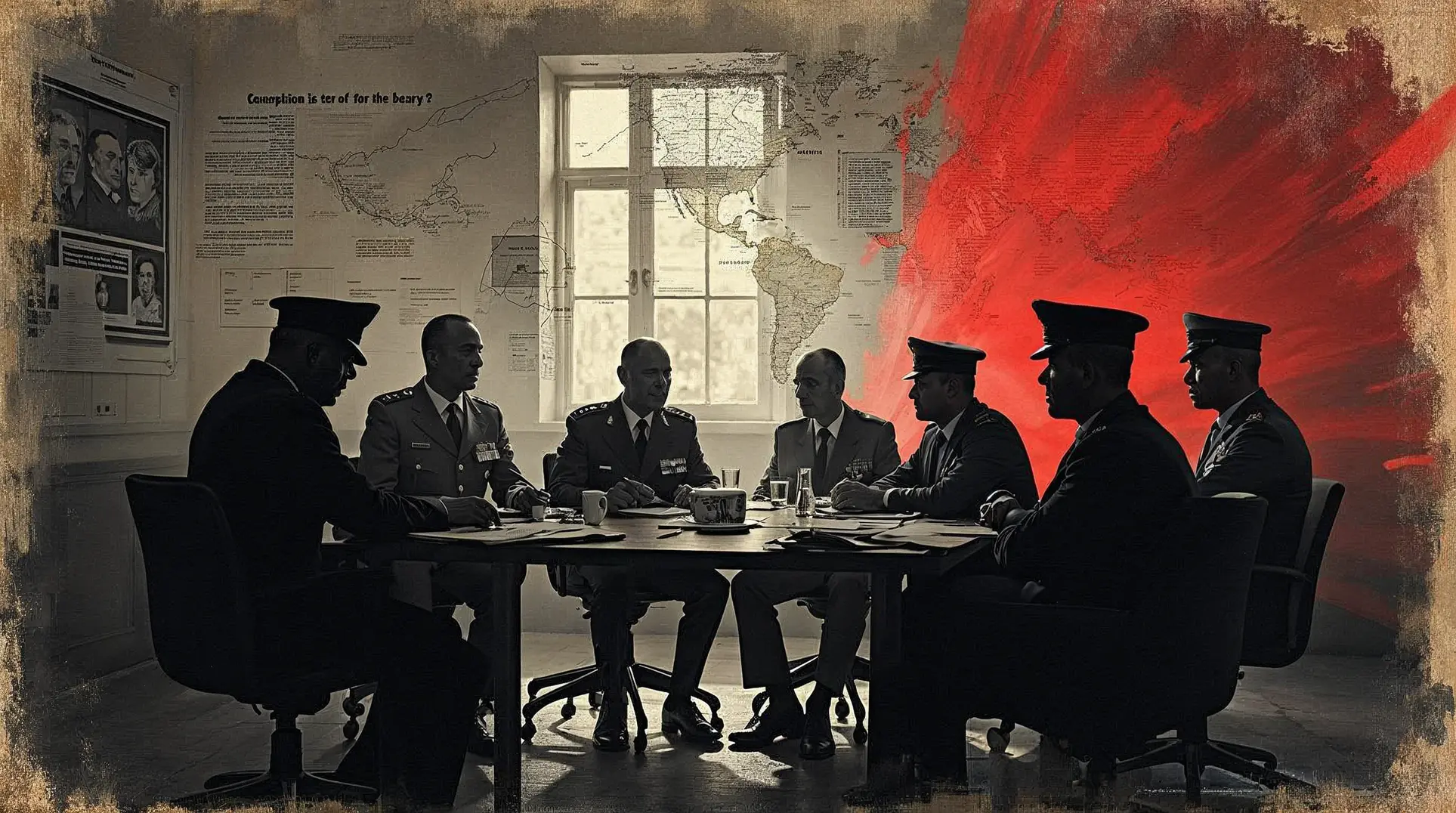
Members are reading: Why Tchiroma's claim of military protection may be either the truth Biya fears most or a dangerous bluff that could still fracture the army.
The street violence and international concern
The protests themselves have followed a grimly predictable pattern. Opposition supporters, convinced the election was stolen, take to the streets. Security forces respond with live ammunition, tear gas, and mass arrests. International partners issue statements expressing "concern" and calling for "dialogue." The cycle has repeated in Yaoundé, Garoua, Douala, and Bafoussam, with reports of deaths and hundreds detained.
France and the EU's responses deserve particular scrutiny. Paris called for "restraint and respect for democratic processes," language so familiar it might as well be a template. The EU echoed similar concerns. These statements serve their purpose for European audiences—demonstrating commitment to democratic values—while changing absolutely nothing on the ground in Cameroon. Biya knows that French and European condemnation rarely translates into meaningful consequences, particularly when France has strategic interests in maintaining stability in a country bordering Nigeria, Chad, and the Central African Republic.
The international community's influence in Cameroon has been steadily declining anyway. Recent humanitarian aid cuts have reduced leverage, while Biya has skillfully played China, Russia, and Turkey against Western partners, diversifying his international support base. When ECOWAS and the AU remain largely silent, and Western powers limit themselves to statements, Biya has little external pressure to negotiate seriously with opposition.
Tchiroma's call for a three-day national lockdown represents an attempt to maintain protest momentum while shifting tactics from street demonstrations—which expose protesters to state violence—to economic disruption. The effectiveness of such lockdowns depends on widespread voluntary compliance and the inability of security forces to compel normal activity. In Cameroon's current context, with the military deployed across cities and the government willing to use force, the lockdown's success is uncertain.
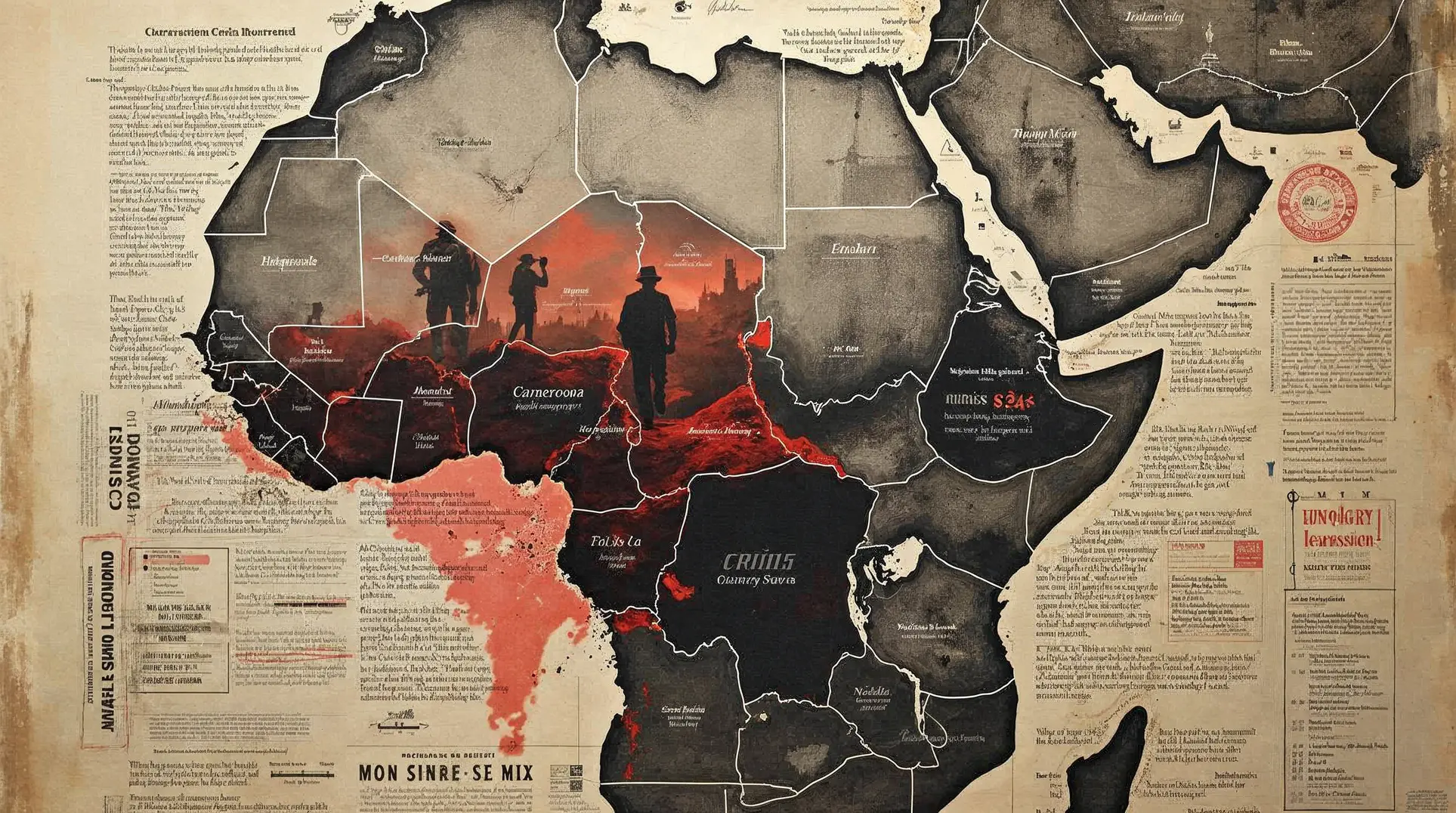
Members are reading: How the Anglophone conflict has created both a template for state repression and a potential accelerant for multi-front crisis if military loyalty fractures.
Succession politics and the Biya endgame
At the center of all these dynamics is the unavoidable reality: Paul Biya is 92 years old and has governed Cameroon for 42 years. Every political crisis is now, at some level, about succession. Every institutional fracture is partly about positioning for the post-Biya era. Every opposition movement must calculate not just how to challenge Biya, but what comes after him.
The government's accusation that Tchiroma is "inciting violence" is standard rhetoric, deployed against every serious opposition figure from Kamto to anglophone leaders. What matters is whether the accusation leads to arrest—and whether any attempt to arrest Tchiroma would trigger his supposed military protectors to resist. That confrontation would definitively answer whether his claim of army support is real or bluff, but it would answer it through violence.
Biya's own political survival has depended on preventing exactly this kind of open military fracture. He has carefully rotated commanders, balanced ethnic representation in senior ranks, maintained the Republican Guard as a separate loyalty structure, and ensured that no single general accumulates enough independent power to challenge him. This system has worked for four decades, but it depends on Biya's personal authority and his ability to arbitrate between competing military factions.
As that authority weakens—whether through age, incapacity, or contested legitimacy—the system's stability becomes uncertain. Succession through constitutional means requires Biya to either die in office or choose to step down, then for the Senate President to assume power temporarily while elections are organized. But this constitutional process assumes institutional continuity and elite consensus that may not survive actual transition.
The alternative scenarios range from managed succession, where Biya's inner circle pre-selects his replacement and ensures military compliance, to competitive succession, where multiple factions vie for power through a combination of political maneuvering and implicit or explicit military backing. Tchiroma's current strategy—claiming military protection, declaring electoral victory, calling for lockdowns—appears designed to position himself as a viable alternative around whom dissatisfied elites and military elements could coalesce.
What comes next: Three scenarios
The immediate future presents three distinct pathways, each with different implications for Cameroon's stability and the region.
Scenario one: Repression succeeds. Security forces arrest Tchiroma, suppress protests through sustained violence, and demonstrate that military loyalty remains intact. This scenario resembles the 2018 Kamto aftermath—opposition contained but not eliminated, periodic unrest, no genuine political opening. It preserves the status quo but resolves none of the underlying tensions around succession, Anglophone grievances, or democratic legitimacy. The cost is further entrenchment of authoritarian governance and continued international isolation.
Scenario two: Negotiated settlement. Facing genuine military uncertainty and sustained protests, Biya's inner circle opens dialogue with opposition, potentially offering concessions such as a government of national unity, electoral reforms, or even early elections. This would require Biya to perceive existential threat—unlikely given his survival of previous crises—or for his advisors to calculate that managed political opening is preferable to uncontrolled transition. France might facilitate such negotiations if convinced that instability threatens its regional interests, though its recent track record in francophone Africa suggests declining influence and commitment.
Scenario three: Fragmentation and escalation. Tchiroma's military protection claim proves accurate, triggering defections or standoffs between army units. The government attempts to arrest him, his protectors resist, and Cameroon slides into a situation where multiple armed actors claim legitimacy. This scenario could rapidly involve the Anglophone separatists intensifying operations, create humanitarian catastrophe, and potentially draw in Nigeria and Chad to prevent spillover. It is the most dangerous outcome and, unfortunately, increasingly plausible given the structural stresses already present in Cameroon's security sector.
As we documented in analyzing the recent electoral crisis dynamics, opposition declarations of victory in francophone African elections often lead to protracted standoffs rather than genuine transfers of power. The difference this time is the explicit introduction of military loyalty as a variable, transforming the crisis from political theater into potential armed confrontation.
Implications: Sovereignty, fragmentation, and the regional stakes
Three critical insights emerge from this developing crisis, each resonating beyond Cameroon's borders:
First=, the era of stable authoritarian rule in francophone Africa is entering a new phase of uncertainty, not because of democratic awakening but because of succession crises in aging regimes. Biya's situation parallels recent transitions in Chad (following Idriss Déby's death) and earlier dynamics in Gabon. When leaders who have governed for decades approach biological limits, the institutions they built around personal authority often lack the resilience to manage transition smoothly. The result is fragmentation, violence, and opportunity for regional instability.
Second, the military's role as ultimate arbiter of political outcomes—a legacy of both post-colonial state formation and cold war patronage—continues to define what is possible in African politics, regardless of constitutional frameworks or electoral processes. Tchiroma understands this reality, which is why he emphasizes military protection rather than legal challenges or international mediation. Until African states develop genuinely professionalized militaries accountable to constitutional order rather than individual rulers, political transitions will remain contests over armed force loyalty.
Third, the intersection of multiple crises—disputed elections, separatist conflicts, economic stress, humanitarian emergency—creates compound risks that overwhelm both state capacity and international response mechanisms. Cameroon is simultaneously facing succession uncertainty, Anglophone rebellion, Boko Haram incursions, Lake Chad Basin instability, and now potential military fragmentation. No single policy response addresses this complexity, yet the international community continues to approach each crisis in isolation, missing the systemic nature of the collapse.
The coming weeks will reveal whether Cameroon can contain this particular crisis through its usual combination of selective repression and tactical accommodation, or whether the claim of military protection represents a genuine fracture that the system cannot absorb. For a continent watching similar succession questions approach in Zimbabwe, Uganda, Equatorial Guinea, and potentially beyond, the answer will set precedents that extend far beyond Yaoundé's streets.
What began as another disputed election in another aging autocracy may be transforming into a test of whether post-colonial state structures can survive the transition from the leaders who built them. The soldiers who chose to escort Issa Tchiroma Bakary to safety—if they exist—may have just written the first sentence of a new chapter in Cameroon's history. Whether that chapter concludes with managed transition or state fragmentation remains terrifyingly uncertain.
Subscribe to our free newsletter to unlock direct links to all sources used in this article.
We believe you deserve to verify everything we write. That's why we meticulously document every source.


