


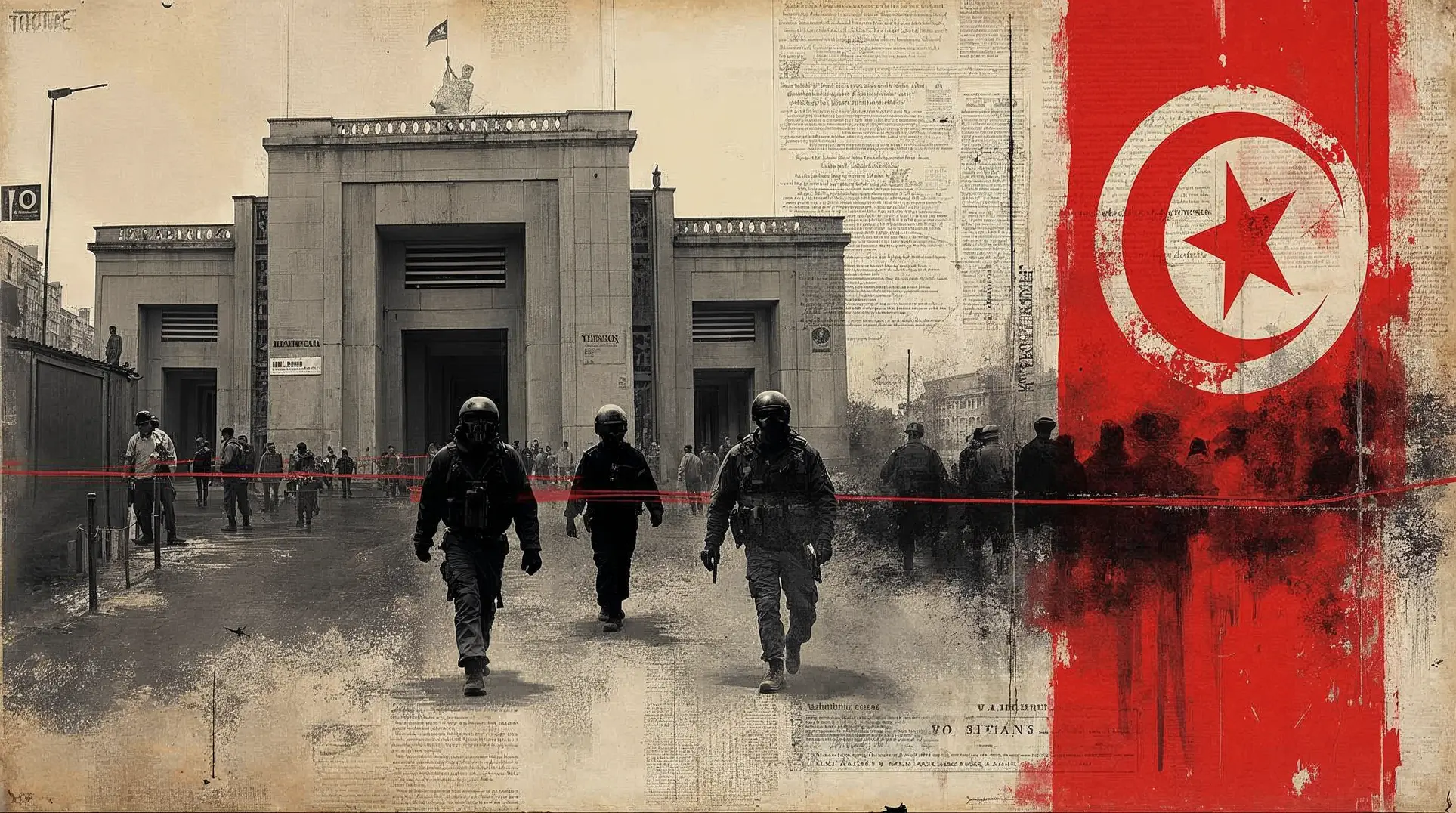
Tunisian President Kais Saied has extended the country's state of emergency by 11 months until December 31, according to a decree published in the official gazette Friday. The extension perpetuates a legal framework first imposed in November 2015 following a suicide bombing that killed 12 presidential guards in Tunis, transforming what was initially a counterterrorism response into the structural foundation of Saied's expanded executive authority.
The state of emergency grants Tunisia's Interior Ministry exceptional powers that bypass normal constitutional constraints, including the authority to ban public assemblies, impose curfews, conduct searches without judicial warrants, and detain individuals on security grounds. These provisions, renewed continuously for nearly a decade, have become the primary legal instrument through which Saied has governed since his July 2021 suspension of parliament and subsequent assumption of near-total executive control.
Latest Situation Update
The presidential decision requires no parliamentary approval under the current constitutional arrangement, which Saied unilaterally redesigned through a 2022 referendum that formalized his concentration of power. The Interior Ministry now operates under permanent exceptional authority that would have been unthinkable during Tunisia's brief democratic transition following the 2011 revolution.
The 11-month extension suggests deliberate planning for an extended governance framework under emergency conditions. Human rights organizations including Human Rights Watch and Amnesty International have consistently documented how the emergency framework enables systematic suppression of political opposition, independent media, and civil society activism that gained space during the post-2011 period. The pattern mirrors developments elsewhere in the region, including Burkina Faso's recent dissolution of all political parties under military decree, where national security rationales have formalized authoritarian consolidation.
Members are reading: How Saied's extended emergency timeline sets conditions for controlled elections and preemptive opposition suppression.
Conclusion
The state of emergency extension consolidates a governance model where exceptional powers have become routine administrative practice. What Tunisia's 2015 security threat initiated, Saied's political project has transformed into permanent architecture, fundamentally altering the power balance between executive authority and civil liberties that defined the country's post-revolutionary potential.
Subscribe to our free newsletter to unlock direct links to all sources used in this article.
We believe you deserve to verify everything we write. That's why we meticulously document every source.


