

- Over 31,000 Sudanese refugees have fled into CAR since April 2023, straining communities already facing 40% humanitarian need rate
- Wagner Group controls $500M annual mineral extraction while committing 362+ violent incidents resulting in 786+ civilian deaths
- CAR suffered $30B+ GDP loss from decade of conflict, with December 2025 elections threatened by opposition boycott
The escalating conflict in neighboring Sudan has increasingly spilled over into the Central African Republic, aggravating an already fragile security environment and intensifying violence against civilians—the most significant threat to stability in the country. This development comes as CAR struggles to emerge from over a decade of civil war, with approximately two out of every five people requiring humanitarian aid in one of the world's most protracted crises.
The spillover from Sudan adds a dangerous new dimension to CAR's existing challenges. Since April 2023, over 31,000 refugees and returnees have crossed into CAR from Sudan, straining communities already grappling with limited resources and persistent insecurity. The influx coincides with preparations for presidential and parliamentary elections scheduled for December 28, 2025, which the main opposition coalition has threatened to boycott unless electoral reforms are implemented.
As international attention focuses elsewhere and humanitarian funding dwindles—with only 59 percent of required funds received in 2023—a critical question emerges: Can the Central African Republic prevent the complete collapse of its fragile peace while absorbing new pressures from regional instability?
A decade of conflict leaves deep scars
The Central African Republic has been trapped in a cycle of violence and fragility for over a decade, with devastating consequences for its people and economy. Since the civil war began in December 2012, when the Muslim Séléka rebel coalition launched a military campaign against the government, the country has experienced widespread human rights abuses, including indiscriminate killings of civilians.
By early 2013, Séléka rebels had taken control of the capital, Bangui, overthrowing then-President François Bozizé. This triggered the formation of Christian and animist anti-balaka militias, which carried out extensive reprisal attacks against Muslim civilians, adding a dangerous sectarian dimension to the conflict. Despite the presence of French troops and UN peacekeeping forces, violence and assaults on civilians have persisted.
The economic toll has been catastrophic. Using the Synthetic Control Method to measure the conflict's impact, researchers found that CAR's GDP per capita fell by 45.3 percent to 47.8 percent compared to what it would have been without conflict, leading to a cumulative GDP loss of $29.7 billion to $32.4 billion between 2013 and 2022. Even under conservative estimates, the economy shrank by 35.3 percent—one of the highest economic impacts of civil conflict recorded globally.
A key reason for this severe economic impact was the disruption of vital trade routes. The war, particularly during the Séléka occupation of Bangui, crippled the Douala-Bangui Road axis and the river corridor from Pointe-Noire to the port of Bangui. The long-term deterioration of the country's technical capacity, affecting both the private sector and government administration, further contributed to the economic downturn.
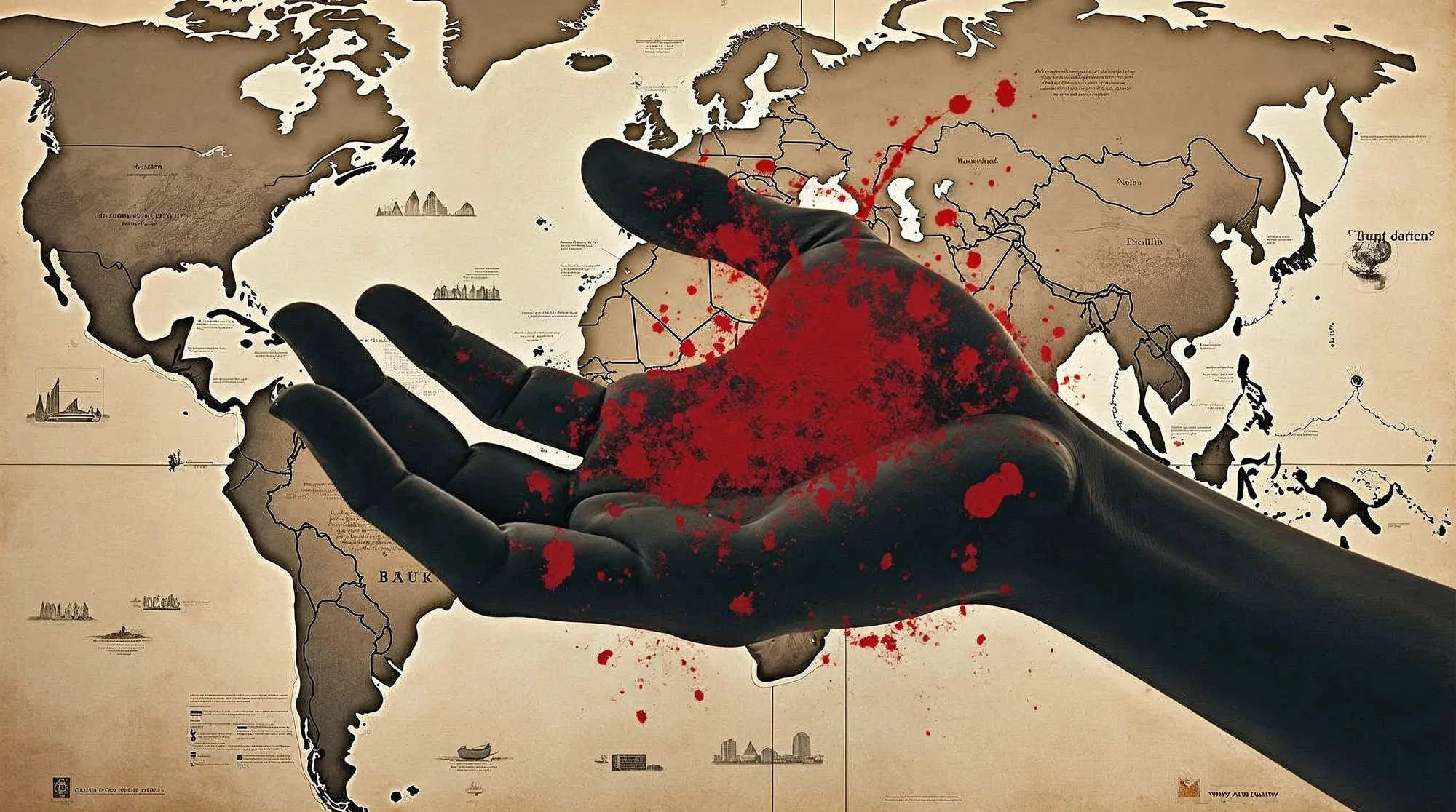
Shocking revelations: How Russian mercenaries tortured civilians with electric cables, beheaded rebel leaders, and seized control of CAR's $500M mining empire—turning an entire nation into their personal fiefdom
Sudan's crisis creates new pressures
The spillover from Sudan's civil war, which erupted in April 2023, has created additional strain on CAR's already overwhelmed systems. Over 31,000 Sudanese refugees and Central African returnees have crossed into the northeastern regions of the country, particularly around Birao and Ndélé, areas that have traditionally been supplied by Sudan.
Since the start of Sudan's war, trade in foodstuffs has been disrupted, particularly during the rainy season. Food prices have risen by 50 percent in a region already experiencing severe food insecurity—a situation likely to worsen during the lean season. The main urban centers in northeastern CAR now face severe supply shortages, with prices of basic foodstuffs such as millet doubling in some areas.
The humanitarian implications extend beyond food security. The 31,000 refugees and returnees are settling in communities with extremely limited resources and minimal humanitarian presence. Most are staying with host families already struggling to meet basic needs, creating tensions over scarce resources in areas where humanitarian needs had already increased by 34 percent between 2022 and 2023 in some prefectures.
The northeastern border area with Sudan has also seen increased armed activity. Fighting has erupted near the border, and there are reports of air raids and the recruitment of CAR fighters by Sudanese forces, contributing to ongoing violence and instability in the region. This military activity further restricts humanitarian access and disrupts what little economic activity exists in these remote areas.
A humanitarian catastrophe in slow motion
The humanitarian situation in CAR remains among the world's most severe, part of a broader global crisis affecting hundreds of millions. The country faces acute food insecurity, with significant portions of the population struggling to access adequate nutrition amid ongoing conflict and economic disruption. Agricultural production remains low, compounded by rising costs of essential goods and transportation. The economic disruption from conflict has left nearly 75 percent of the country's population living in poverty.
Access to basic services remains severely limited. A decade of conflict has hampered the development of public services, including critical infrastructure such as hospitals, schools, and transport. The few paved roads connecting the country are insufficient to reach remote regions, which are sometimes plagued by insecurity. The rainy season affects trade and mobility, since most roads are unpaved tracks. Between January and June 2024, 14 people, including seven civilians, were killed in 33 incidents involving improvised explosive devices.
The education system is stretched to breaking point. With half of CAR's population under the age of 18, armed conflict and population displacement are having a devastating effect on children's schooling. School attendance remains severely challenged by insecurity, displacement, and lack of resources, with hundreds of thousands of children facing significant barriers to accessing education. The shortage of qualified teachers compounds these difficulties, with some areas experiencing extremely high pupil-to-teacher ratios that make effective learning nearly impossible.
The brutal truth behind the numbers: Why the IMF's $7.5 billion gamble on fragile states is failing in CAR—and what it reveals about the limits of financial diplomacy when warlords control the economy
Elections amid uncertainty
Preparations continue for the scheduled presidential and parliamentary elections on December 28, 2025, but the process faces significant challenges. The main opposition coalition has expressed concerns over the lack of electoral reforms and has threatened a potential boycott unless reforms are implemented. The opposition in CAR has stated that it would boycott elections in which President Touadera is running for a third term.
Local elections, originally expected in October 2024, were postponed to April 2025 due to budget shortfalls. As of October 1, only $4.8 million out of the $14.8 million needed to organize these elections had been mobilized, despite recent financial commitments from some partners. The funding gap threatens to further delay the electoral process and undermine confidence in democratic institutions.
The security situation poses additional challenges to holding free and fair elections. Opposition figures and civil society groups have called for the postponement of elections due to the deteriorating security situation and accusations that Touadera's United Hearts Movement has rigged the election in its favor. During the December 2020 presidential election, approximately 35 percent of registered voters were able to cast ballots, with armed rebel groups disrupting voting in many areas through violence and intimidation. The election took place amid significant security threats, with rebels destroying voting materials and attacking polling stations in multiple locations.
A July 2023 referendum, denounced as a farce by the opposition, removed presidential term limits, clearing the way for President Touadera to run as many times as he wants. This constitutional change has further polarized the political landscape and raised questions about the country's democratic trajectory.
Fragmented peace, persistent violence
Despite seven peace agreements since 2012, armed groups continue to operate openly and control much of CAR's territory. The most recent Political Agreement for Peace and Reconciliation, signed in February 2019 between the government and fourteen armed groups, has seen limited implementation of its core provisions.
Some progress has been made. In June 2023, the UN announced that two armed groups and three militant factions from a long-held rebel area disbanded. More recently, peace efforts have included commitments from armed groups such as Return, Reclamation and Reintegration (3R) and Union for Peace in the Central African Republic (UPC) to adhere to the 2019 agreement, with a recent peace accord brokered with Chad's support.
However, violence continues. In July 2024, members of the 3R armed group attacked the village of Ngoutèrè in Ouham Pende prefecture, killing five members of the armed forces and eight civilians, and displacing about 8,500 people. In June 2025, clashes between factions of 3R in Bozoum killed at least six civilians and displaced between 5,000 and 6,000 people.
The main rebel alliance, the Coalition of Patriots for Change, has fractured. One faction led by Ali Darassa expressed willingness to engage in dialogue with the government, while former President François Bozizé, serving as the CPC's General Coordinator, has challenged Darassa's decisions and insisted on certain conditions for dialogue.
In southeastern CAR, fighting between the national army—backed by Wagner paramilitary forces—and the Azande Ani Kpi Gbe militia has been escalating since early May 2025. The clashes, concentrated in Haut-Mbomou prefecture around Zemio town and Mboki locality, were sparked by arrests within the Zande community and disputes over local resource control. By May 8, the fighting had displaced more than 10,000 people, with reports of looting and burning of homes.
International response falls short
The UN Multidimensional Integrated Stabilization Mission in the Central African Republic (MINUSCA), established in April 2014, currently operates with approximately 17,000 uniformed personnel, including military peacekeepers and police. The mission faces significant challenges in fulfilling its mandate to protect civilians and dismantle armed groups, primarily due to lack of infrastructure and, critics say, reluctance to use military force.
Since the start of the mission, MINUSCA has suffered significant casualties from attacks by armed groups, with hundreds of peacekeepers killed in hostile incidents over the years. In June 2024, the UN announced the deployment of additional MINUSCA troops to CAR's war-torn southeast Haut Mbomou region to facilitate humanitarian aid delivery. The mission's mandate has been extended until November 2025, though debates continue about potential adjustments and the mission's eventual transition.
Restrictions imposed by CAR authorities since December 2023 on the use of uncrewed aerial vehicles have hampered MINUSCA's operations. The mission terminated its contract for UAVs on July 15, 2024, a decision that disappointed some Security Council members who had urged the government to lift these restrictions.
The human rights situation remains dire. The period from June to October 2024 saw a 73 percent increase in human rights violations and abuses—including grave violations against children and conflict-related sexual violence—while the number of victims increased by 83 percent. Despite substantial evidence compiled by rights activists and UN experts, accountability remains elusive.
The humanitarian community aims to provide aid to 1.8 million of the most vulnerable Central Africans in 2025, requiring $326.1 million in funding. However, media coverage and political commitment to resolve the crisis in CAR are negligible, with the country ranking among the ten most neglected crises in the world identified by the Norwegian Refugee Council in 2023.
A nation at a crossroads
The Central African Republic stands at a critical juncture. The spillover from Sudan's conflict adds dangerous new pressures to an already fragile state barely emerging from its own civil war. With Russian mercenaries deeply embedded in the security apparatus and economy, a contested electoral process approaching, and humanitarian needs continuing to mount, the country's trajectory remains deeply uncertain.
The economic damage from over a decade of conflict—a cumulative GDP loss exceeding $30 billion—will take generations to reverse, even under the most optimistic scenarios. The disruption of trade routes, destruction of infrastructure, and erosion of institutional capacity have created structural impediments to recovery that financial assistance alone cannot overcome.
Yet there are glimmers of possibility. The decentralization of peace processes through local-level mechanisms shows promise for addressing community-specific grievances. The Special Criminal Court, operational since 2018, has begun investigations and arrests, offering some hope for accountability. International partners, including the IMF and World Bank, are adapting their approaches to better support fragile states like CAR.
The question is whether these efforts can gain traction before new shocks—whether from regional instability, climate disasters, or political crises—push the country past the point of recovery. With presidential elections just months away, 2025 will likely determine whether CAR can break free from its fragility trap or sink deeper into the cycle of violence and state failure that has defined the past decade.
For the millions of Central Africans requiring humanitarian assistance, and particularly for the hundreds of thousands displaced by violence, the answer to that question is not academic—it is a matter of survival.


