


The Democratic Republic of Congo's military administration in North Kivu has launched a disarmament initiative offering citizens $100 per AK-47 and $1 per bullet, marking what appears to be a policy reversal in Kinshasa's approach to the province's sprawling armed conflict. The October 2025 program targets civilian firearm proliferation in territories contested between government forces and the M23 rebel movement, aiming to reassert state authority through financial incentives rather than coercion.
Yet this initiative emerges from a fundamental contradiction: the same government now purchasing weapons previously distributed firearms to local Wazalendo militias as a counterinsurgency strategy against M23. Civil society organizations in North Kivu warn that monetizing disarmament creates perverse incentives that could deepen rather than resolve the region's security crisis, transforming weapons into commodities in an already dysfunctional conflict economy.
The logic of tactical reversal
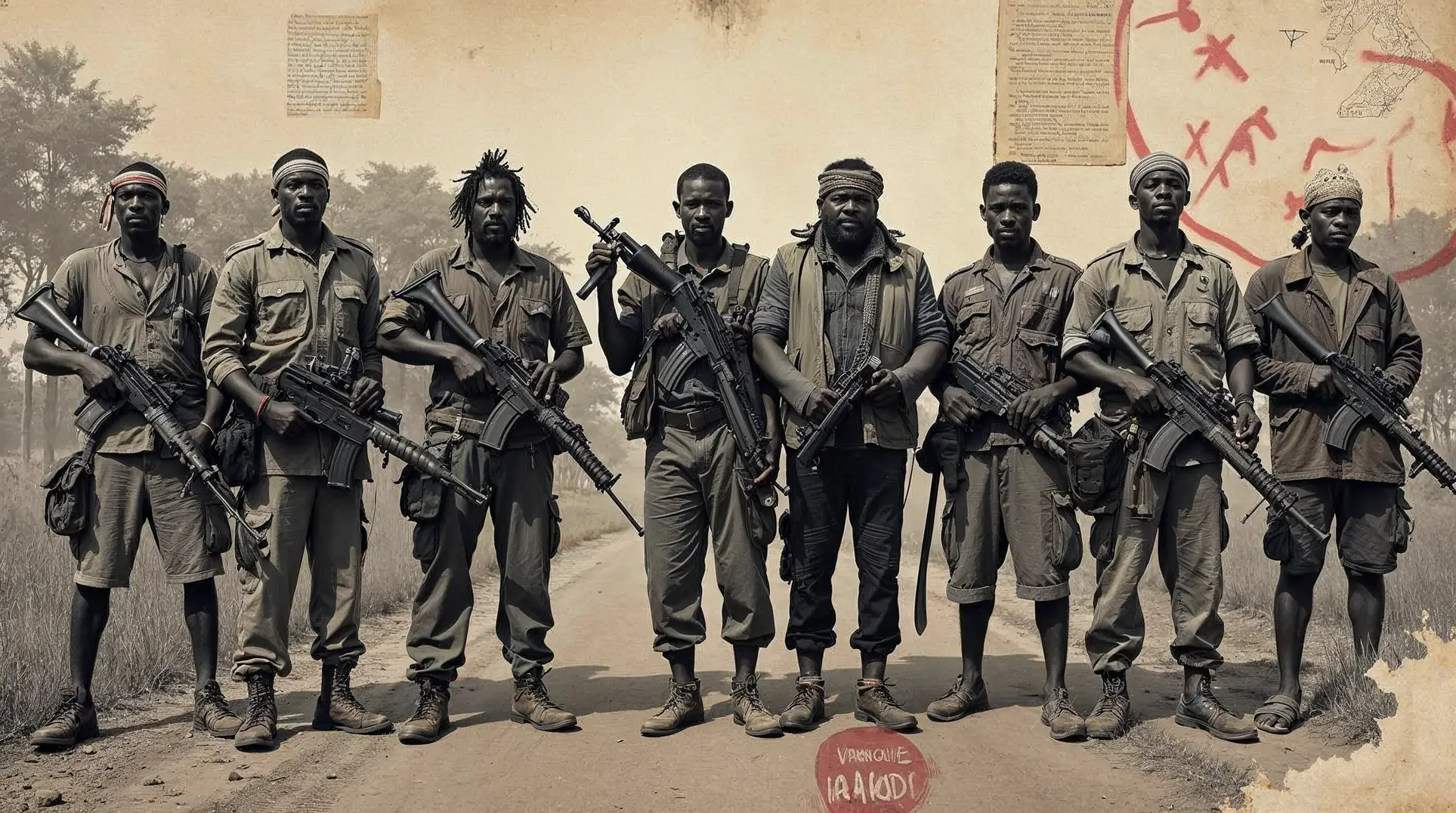
The cash-for-weapons program represents a tactical acknowledgment that Kinshasa's strategy of arming irregular forces has created unintended consequences. Throughout 2024 and early 2025, the DRC government supported Wazalendo militias—loosely organized local defense forces—as proxies in its fight against M23. These militias provided numerical strength and local knowledge that the poorly organized Congolese military lacked, but they operated with minimal oversight and no clear demobilization plan.
Now facing the challenge of managing these armed groups in any potential post-conflict settlement, the government has pivoted to disarmament through financial inducement. The program targets both militia members and ordinary civilians who acquired weapons during years of insecurity, attempting to reduce the estimated hundreds of thousands of small arms circulating in North Kivu. For Kinshasa, this shift serves dual purposes: demonstrating governance capacity in contested territories while preparing for potential peace negotiations that would require militia disarmament.
However, the program's design reveals problematic assumptions. By offering cash without comprehensive reintegration support or addressing the underlying insecurity that drives weapons ownership, the initiative may simply create a market for arms acquisition. In a province where monthly income rarely exceeds $50, the $100 bounty on an AK-47 creates powerful incentives for individuals to obtain weapons specifically to sell them to the government.
Members are reading: How the program's perverse incentives reveal deeper contradictions in DRC's state-building project and the structural impossibility of purchasing security.
Managing symptoms, ignoring causes
The cash-for-weapons program's likely trajectory follows familiar patterns from previous DDR attempts in the region. Initial enthusiasm and weapons collection will provide photo opportunities demonstrating government action. But without genuine reintegration opportunities—vocational training, land access, economic alternatives to armed mobilization—former militia members will remain available for re-recruitment by the highest bidder.
North Kivu's humanitarian crisis, with over 2 million displaced persons and more than 100 active armed groups, reflects conflicts over land, ethnicity, and resource control that weapons buybacks cannot resolve. The program's success will ultimately be measured not by guns collected but by whether it contributes to political settlements addressing these fundamental grievances. Without such settlements, disarmament becomes a temporary pause before violence resumes under new configurations.
Subscribe to our free newsletter to unlock direct links to all sources used in this article.
We believe you deserve to verify everything we write. That's why we meticulously document every source.


