


- Rwanda's military presence doubled to 5,000 troops but engagement dropped 70%, now protecting gas assets over civilians
- Over 1.1 million displaced as insurgency spreads to all 17 districts despite eight years of foreign intervention
- Root causes—economic exclusion, $20B gas wealth inequality, government abuses—remain unaddressed by military-only approach
- Despite foreign troops and billions in gas revenues at stake, Islamic State-linked militants continue their brutal campaign against civilians as humanitarian needs spiral beyond control
In early October 2025, the UN Office for the Coordination of Humanitarian Affairs reported a sharp escalation of violence in Mozambique's northern provinces, with more than 90,000 people displaced in just two weeks. The attacks, carried out by Islamic State-affiliated militants in Cabo Delgado and neighboring Nampula, marked yet another surge in a conflict that has now entered its ninth year with no resolution in sight. As the insurgency reaches its eighth anniversary this month, a troubling pattern has emerged: despite the deployment of thousands of foreign troops, extensive military operations, and the presence of vast natural gas reserves worth billions of dollars, the conflict continues to claim lives, destroy communities, and expose fundamental failures in Mozambique's approach to its most serious security crisis. What will it take to break this cycle of violence, and why have years of military intervention failed to protect the very civilians they were meant to save?
The scale of the crisis is staggering. Since October 2017, when armed men first occupied Mocímboa da Praia for two days, the conflict has caused more than 6,200 deaths and displaced over 1.1 million people—approximately half of Cabo Delgado's population. For the first time since hostilities began, all 17 of Cabo Delgado's districts are now directly affected by violence. The provincial capital, Pemba, remains the only area not to have suffered an attack by the insurgents. In September 2025 alone, around 30 attacks were recorded across the province's villages, resulting in at least 40 deaths—39 of them civilians—and forcing about 20,000 people to flee their communities. The insurgency has also spread beyond Cabo Delgado's borders, with some districts in neighboring Nampula and Niassa provinces coming under attack.
Mozambique's response to the insurgency has been overwhelmingly military. Under pressure from investors whose projects were put on hold, the government invited foreign forces to help fight the insurgency. In 2021, approximately 3,000 troops from Rwanda and the Southern African Development Community Mission in Mozambique (SAMIM) were deployed to Cabo Delgado to support Mozambican forces. Three years later, SAMIM withdrew in July 2024, claiming to have achieved its objective, but Rwandan forces remain on the ground with estimates of more than 5,000 personnel currently deployed, including soldiers and police.
The Rwandan deployment has grown dramatically since its inception. About 1,000 Rwandan troops and police officers first deployed to Cabo Delgado in July 2021 to help contain the insurgency. By August 2025, Mozambique's National Defense Minister Cristóvão Artur Chume and his Rwandan counterpart, Juvenal Marizamunda, signed a Status of Force Agreement in Kigali to keep the Rwandan Defence Force engaged in the fight against the affiliate group known as Islamic State-Mozambique (ISM). The agreement formalized what had been operating under nothing more than a gentlemen's agreement between the two governments, with no mandate, no timeframe, and no accountability.
Other international partners have also intervened. European Union member states and the United States have sent trainers to build Mozambican forces' counter-terrorism capacity, while the EU provides logistical support to Mozambique and Rwanda. Private military companies, including Russia's Wagner Group and South Africa's Dyck Advisory Group, have also intervened, both in active combat and in training government troops.

Rwanda's forces doubled their presence but now refuse civilian protection—why foreign troops protect gas fields while insurgent attacks surge 70%. The shocking reality of outsourced sovereignty revealed.
The insurgency adapts and resurges
Despite these extensive military efforts, the terrorist threat in Cabo Delgado remains active and has shown a disturbing capacity to adapt. In September 2025, ISM led attacks across six districts, from Balama in the southwest of Cabo Delgado to Mocímboa da Praia in the northwest, according to the Armed Conflict Location & Event Data project (ACLED). The brazen attack on Mocímboa da Praia—one of Cabo Delgado's largest towns and a key commercial and transportation hub on the coast of the Mozambique Channel—was particularly significant. "ISM's attack on civilians in Mocímboa da Praia town on 7 September is just the second such incursion since September 2021, indicating a high risk of future attacks in the town," ACLED said in a September 17 update.
The insurgency's tactical evolution is equally concerning. ISM launched two-pronged attacks in the far north and south ends of Cabo Delgado in July 2025. A group of about 60 fighters moved south into Ancuabe and Chiúre districts, meeting no resistance from Mozambique forces. Between July 20 and 28, the escalation of violence by non-state armed groups in Ancuabe, Chiúre, and Muidumbe districts displaced nearly 47,000 people, mostly women and children. The attacks in Chiúre were particularly devastating, with over 42,000 people uprooted—more than half of them children.
The insurgents have also demonstrated an ability to sustain operations despite military pressure. Intensifying attacks by Islamic State-linked terrorists in September and early October 2025 forced tens of thousands of civilians to flee their homes in recent weeks, contributing to a longer deployment for Rwandan troops. The situation marked a dramatic reversal from gains made in early 2024, when Rwandan forces helped flush most of the militants out of Cabo Delgado.
The human cost: Civilians bear the brunt
The conflict's impact on civilians has been catastrophic. UN High Commissioner for Refugees (UNHCR) Head Xavier Creach noted that "families are reaching their limit," with some who once hosted displaced countrymen and women now fleeing themselves. Civilians continue to be targeted amid reports of killings, abductions, and sexual violence, while children face the risk of forced recruitment.
The humanitarian situation is particularly dire for women and children, who represent 80 percent of forcibly displaced people in the region. Gender-based violence remains a critical and pervasive concern. UNHCR's January-September 2024 report reveals an increase in gender-based violence across Cabo Delgado, particularly affecting women (88 percent) and girls (10 percent). The majority of survivors are internally displaced persons (62 percent), with 32 percent from host communities. In half of the reported cases, survivors identified family members, friends, or neighbors as perpetrators, while 38 percent involved intimate partners.
Children face particularly severe risks. In northern Mozambique's Cabo Delgado province, there has been a significant increase in child abductions, especially from May to June 2025, with Al Shabaab taking at least 120 children. The abductions are believed to be motivated by forced labour, child soldier recruitment, and forced marriages. UNICEF reported being "deeply concerned" by the "spike" in abductions of children in Cabo Delgado in February 2025, after insurgents kidnapped ten people, including children, in Quinto Congresso village in Macomia district.
Access to basic services has collapsed in many areas. Ongoing violence has taken its toll on healthcare and other services, with the World Health Organization reporting 60 percent of facilities in the worst affected districts are non-functional due to insecurity, looting, and staff displacement. Recent attacks have led to the closure of 87 schools in Chiúre district, affecting 48,000 students and 490 teachers, alongside the 117 schools that remain closed in Cabo Delgado. More than 100 schools closed due to insecurity by mid-2025, affecting the learning of over 50,000 children, according to UNICEF.
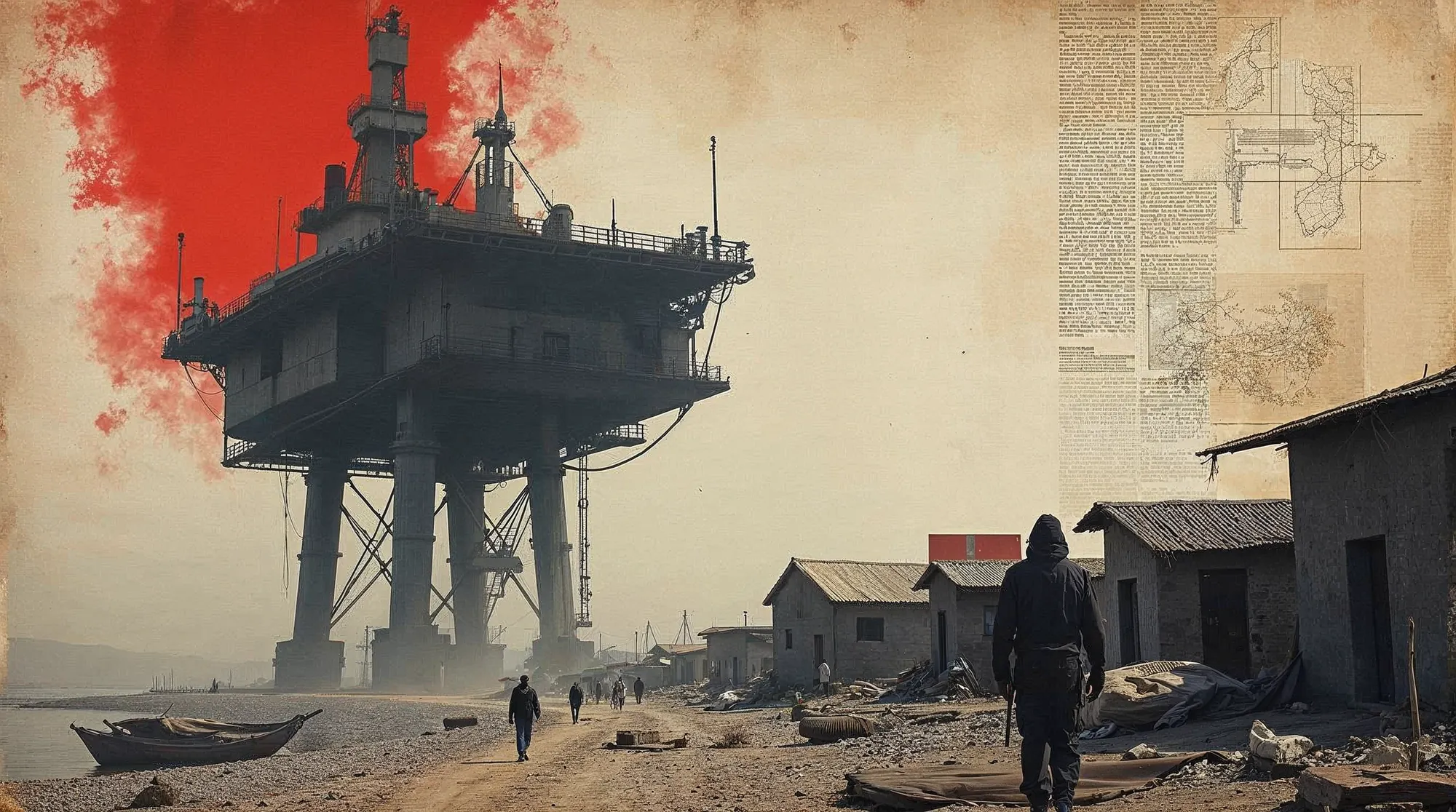
Billions in gas wealth, but locals get nothing. Government troops kill more civilians than insurgents. Why treating symptoms instead of causes guarantees decades more violence—the classified briefing.
Humanitarian crisis deepens amid funding shortfalls
The humanitarian response remains severely constrained. As of mid-2025, humanitarian needs have risen sharply while resources have declined significantly since 2022. The UN's humanitarian response plan for Mozambique was only 19 percent funded as of July 2025. Of the $352 million requested, just $66 million has been received—forcing agencies to reduce their response targets by over 70 percent. They now aim to assist only 317,000 people, down from the target of 1.1 million at the start of the year.
Between April and September 2025, around 2.09 million people faced acute food insecurity, including 143,000 in Emergency (IPC Phase 4) levels and more than 114,000 acutely malnourished children. From October 2025 to March 2026, the number of food-insecure people is projected to rise to 2.67 million, driven by depleted food reserves, irregular rainfall, and continued conflict and displacement, with 170,000 expected to experience IPC Phase 4.
Humanitarian access remains highly constrained, with reports of ransom demands on trucks and the looting of aid intended for assisting the displaced. Children separated from their families face heightened risks of violence, exploitation, and abuse. Médecins Sans Frontières has been forced to suspend outreach activities five times in 2025 due to insecurity, for at least two weeks at a time, particularly in Macomia and Mocímboa da Praia, leaving thousands of people without access to healthcare and jeopardizing the continuity of care for patients.
Political dialogue: A potential turning point?
Amid this bleak landscape, there are tentative signs of a shift in approach. In October 2025, the governor of Cabo Delgado, Valige Tauabo, made a surprising appeal to insurgent groups to take advantage of the national inclusive dialogue as a space to express their grievances. The invitation was made at a meeting with the population of Mocímboa da Praia district, where the insurgency began in 2017 and where terrorists recently gathered believers in a mosque.
This openness to dialogue follows widespread violent protests after the October 2024 elections, which led the government to initiate political dialogue efforts that could influence conflict resolution strategies in Cabo Delgado. However, inclusion remains limited, and tensions persist. The government's initial approach to protests was not unlike its approach to the insurgency—deploying police and military to disperse protesters, resulting in 4,000 detentions and civilian casualties. President Daniel Chapo himself, in comments to the press in February 2025, likened the protesters to the terrorists in northern Mozambique.
The government's pivot toward dialogue in March 2025 surprised observers. Meetings between Chapo and opposition leader Venâncio Mondlane produced promises to compensate protesters harmed by police and to provide amnesty for the thousands detained during months of protest. If applied to the Cabo Delgado context, these commitments could represent a step forward in repairing the social contract in northern Mozambique.
Economic and political pressures mount
The conflict's economic toll extends far beyond Cabo Delgado. Mozambique's economy contracted by approximately 2.4 percent GDP in the first half of 2025 due to political unrest, fiscal instability, and low investor confidence, with the conflict in northern Mozambique identified as a key destabilizing factor. Recovery is projected over the medium term, but the suspension of major gas projects and the ongoing insecurity continue to deter investment.
The political landscape is also shifting. Following widespread violent protests after the October 2024 elections, the government has initiated political dialogue efforts which could influence conflict resolution strategies in Cabo Delgado. A recent study by the Observatório de Meio Rural revealed protests were most intense not only in urban areas but areas associated with extractive industries, such as Montepuez District in Cabo Delgado, suggesting common grievances across the country about resource exploitation and exclusion.
The path forward: Beyond military solutions
As the insurgency enters its ninth year, the limitations of a purely military approach are undeniable. Despite the deployment of thousands of foreign troops, extensive military operations, and billions of dollars in security assistance, the conflict continues unabated. The situation demands a fundamental rethinking of strategy—one that addresses not just the symptoms of violence but its underlying causes.
Sustaining momentum for political dialogue is key not only to maintaining general political stability but also to enabling more substantive, long-term progress in northern Mozambique. The preliminary commitments from recent political talks—compensation for victims of security force abuses, amnesty for detainees, and support for youth initiatives—if applied to Cabo Delgado, could begin to address the grievances that fuel the insurgency.
However, translating dialogue into concrete action will be the greatest challenge. Changes in elite calculus toward the costs of the conflict, along with the allocation of political and financial resources needed for long-term stabilization, are likely to remain obstacles to even the most well-intentioned plans. The government must overcome its reluctance to publicly recognize the situation as a humanitarian crisis and give the emergency the sense of urgency it needs to catalyze international donors to respond to the growing humanitarian gap.
The international community must also reckon with a painful reality: Mozambique is a reminder that the world's failures to sustain investments in peace produce humanitarian fallout and widespread displacement. Without immediate steps to ensure the safety and security of displaced persons and an increase in humanitarian funding, northern Mozambique's population could face a wider humanitarian and security crisis with regional implications.
As families in Cabo Delgado reach their limit after years of displacement, as children are abducted and schools close, as healthcare collapses and hunger spreads, the question is no longer whether the current approach is failing—it clearly is. The question is whether Mozambique and its international partners have the political will to fundamentally change course before this crisis becomes even more intractable, potentially lasting decades like similar insurgencies across Africa. The answer to that question will determine the fate of millions of Mozambicans in the years to come.


