


Two ballistic missiles and multiple explosive-laden drones were fired at Aden International Airport at dawn on Wednesday 7 October, according to Yemen's Transport Ministry. One missile struck near the runway minutes before Yemenia Flight 603 from Cairo was due to land, and authorities diverted the aircraft to Jeddah, Saudi Arabia. Two other civilian aircraft already on the ground were moved to safety.
Drones kept hovering over the airport after the strike. Security forces evacuated passengers and staff and cleared the terminal. Aden's Security Department and Yemen's Ministry of Interior reported no casualties. The Associated Press reported that a Yemenia flight later landed safely in Aden; it is not clear whether this was Flight 603 after its diversion. Saudi-led coalition spokesman Maj. Gen. Turki al-Malki said the coalition was tracking the launch platform over Sanaa, which is held by the Houthis (the Iran-aligned movement that controls much of northern Yemen). The coalition later said it had destroyed launch platforms in Sanaa and a missile storage facility in Saada.
A counteroffensive on the coast, strikes across the theatre
The attack came during a Saudi-backed government counteroffensive, known as Operation Dawn of Yemen. Government forces, reportedly supported by 100 coalition fighter jets, claim to have retaken the Red Sea port of Mokha (also spelled Mocha) and areas around the Bab el-Mandeb Strait, including the town of Dhubab. The Houthis deny that Mokha has fallen and say they repelled government advances. Government military sources have not fully confirmed the recapture. They said only that they cut the supply route to the port.
Crisis.Zone reported the Houthi capture of Mocha on 10 September and the seizure of Perim Island inside the strait a day later.
The same morning, Houthi military spokesman Brig. Gen. Yahya Saree claimed responsibility for drone attacks on King Khalid International Airport in Riyadh. He also claimed missile and drone strikes on Abha International Airport, the Khamis Mushait airbase, and military sites in Najran and Asir. Saudi authorities did not immediately confirm that the Riyadh airport was struck. Flights there were halted for more than an hour. Al-Malki confirmed that the coalition intercepted one ballistic missile north of Riyadh and a separate missile aimed at Khamis Mushait.
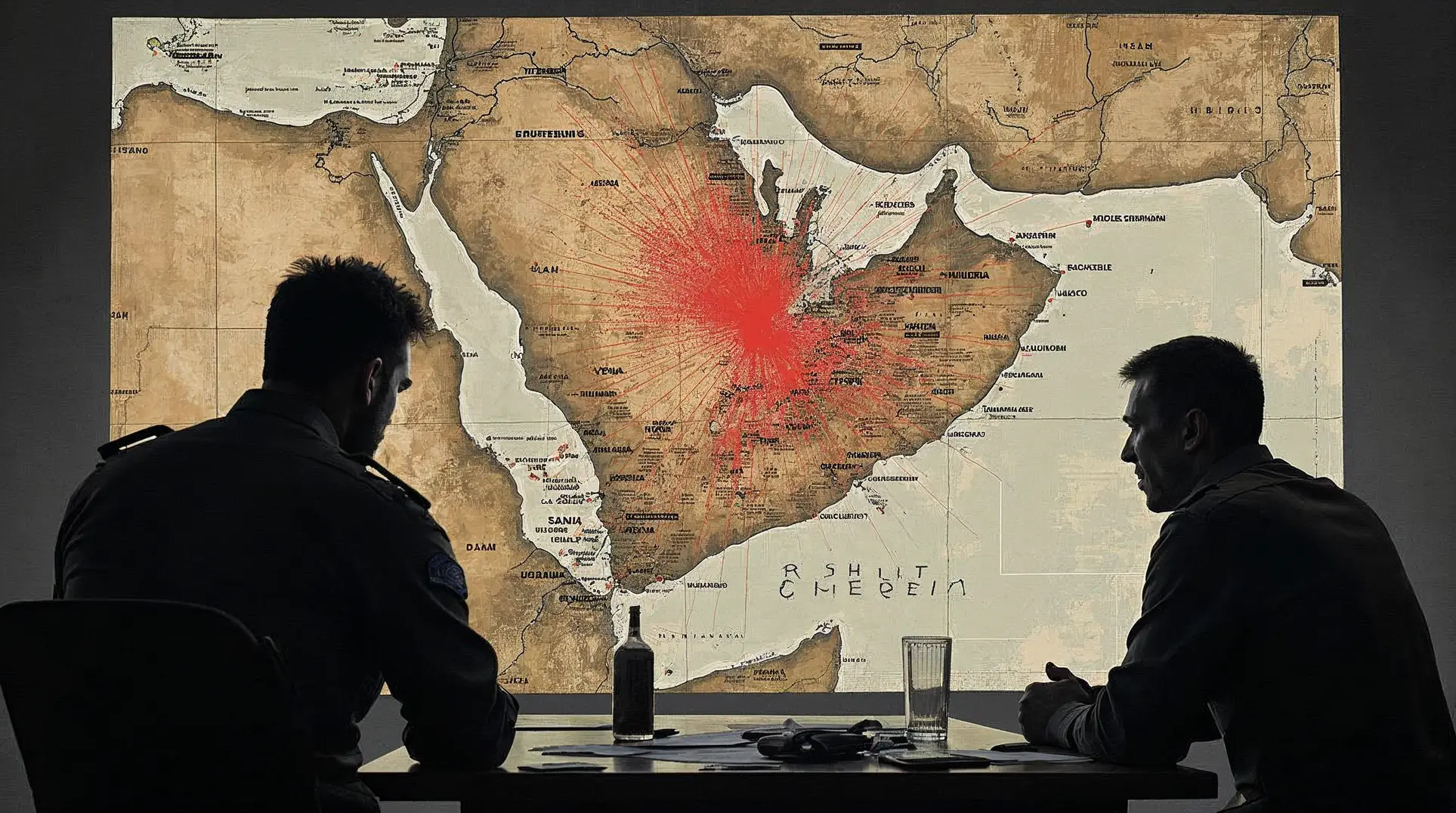
Observers are reading: why holding recaptured ground and stopping missile fire are separate tests, and which signals to watch next.
Become an Observer — it's free. Get full access to all Crisis.Zone analysis, briefings and breaking coverage.
The human cost and the open question
The International Organization for Migration (IOM) reported on 7 October that more than 200,000 people have been displaced since fighting reignited in early September. The figure was 76,000 in mid-September. The United Nations says nearly 1,000 people have been killed in the latest fighting. Agence France-Presse reported on 6 October that sources on both sides put the toll of the previous 24 hours at more than 270: 115 government troops according to government sources and 160 fighters according to Houthi sources. The al-Salam camp in Aden's Dar Sad district faces acute shortages of water and bedding.
As of 7 October, the reporting supports a limited answer. A ground counteroffensive, on the claims made so far, has not removed the Houthis' ability to fire at Aden's airport and at Saudi targets. Yemen's Human Rights Ministry warned of "a humanitarian disaster." Whether the coalition can hold what it retakes, or whether neither side can reach a durable military outcome, is not yet settled by the evidence.
Become an Observer — it's free — to unlock direct links to all sources used in this article.
We believe you deserve to verify everything we write. That's why we meticulously document every source.


