


Allied Democratic Forces fighters operating as the Islamic State Central Africa Province killed at least 15 civilians across three villages in North Kivu's Lubero territory on New Year's Day, local officials confirmed Friday. The attacks in Kilonge, Katanga, and Maendeleo followed the group's established pattern of targeting unprotected civilian populations with bladed weapons while avoiding direct engagement with military forces.
The massacre marks the latest in an escalating campaign of civilian killings that has intensified throughout the second half of 2025, raising fundamental questions about the effectiveness of regional counter-insurgency strategies. Despite the presence of joint Congolese-Ugandan military operations launched in July 2025 and the continuing deployment of UN peacekeepers, ISCAP's capacity to inflict mass civilian casualties remains intact and may be expanding.
A pattern of impunity
The New Year's Day killings cannot be understood in isolation. They represent the continuation of a deliberate strategy of civilian terror that has accelerated dramatically in recent months. In November 2025, a UN report documented that ISCAP killed 89 civilians in a single week of coordinated attacks across the same Lubero territory, including a massacre at a hospital. Two months earlier, in September, the group murdered at least 72 people at a funeral in Ntoyo, an attack the Islamic State formally claimed while explicitly stating they were targeting Christians.
This frequency and scale of attacks reveals more than the persistent presence of an armed group. It demonstrates a structural failure of protection in a region where civilian populations have been effectively abandoned to asymmetric violence. The group operates under the leadership of Seka Musa Baluku, with a mobile camp commanded by an individual known as 'Abuwakas' reportedly responsible for much of the recent violence in northern Lubero. Their operational pattern is consistent: avoid sustained confrontation with the Congolese Armed Forces (FARDC) and Ugandan People's Defence Force (UPDF), retreat into forested terrain, and strike soft targets with brutal efficiency.
The M23 resource drain
The escalation in ISCAP violence is occurring against the backdrop of a critical diversion of military resources. The FARDC remains primarily focused on combating the M23 rebellion in other parts of North Kivu, a conflict that has absorbed the bulk of the army's operational capacity and international attention. This strategic prioritization has created a security vacuum in territories like Lubero, where ISCAP operates with relative freedom.
The resource allocation reflects a zero-sum reality in a region where state military capacity is finite and overstretched. While M23's advances near Goma draw headlines and diplomatic pressure, the slower-burning ISCAP insurgency continues its work of systematic civilian elimination in areas that lack both military protection and political visibility.
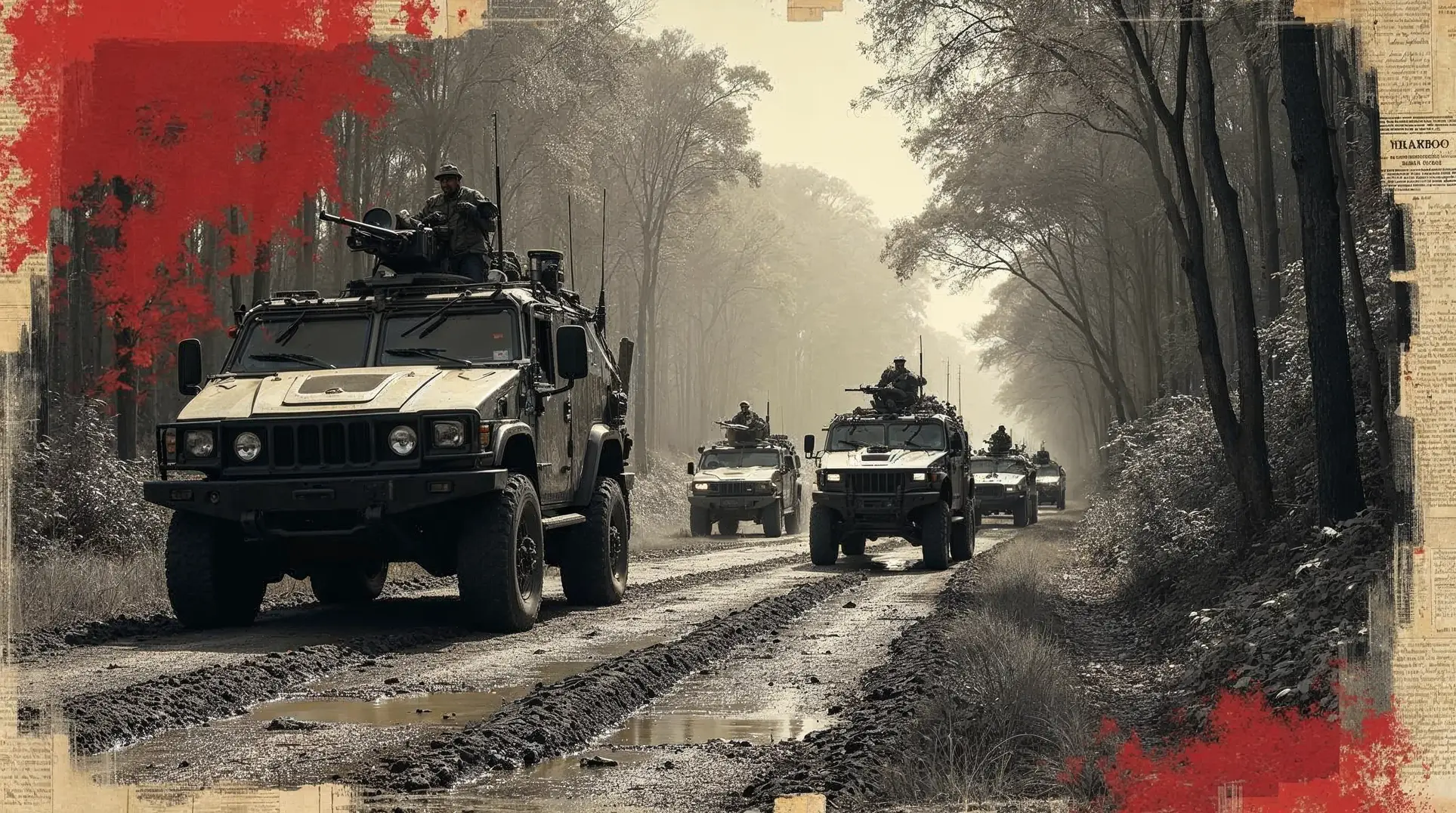
Members are reading: Why intensified military operations may be making civilians more vulnerable to ISCAP retaliation, not safer.
The cost of strategic failure
The New Year's Day killings in Lubero confirm what months of escalating violence have already demonstrated: the current security response in eastern Congo is failing on its own terms. The measure of success in counter-insurgency is not the number of operations launched but the reduction in harm to civilian populations. By that metric, the second half of 2025 represents a period of accelerating failure, with hundreds of civilians killed in attacks that follow a predictable pattern yet remain largely unprevented.
The challenge facing policymakers is whether to acknowledge this failure and fundamentally rethink the protection architecture, or to continue investing in a military-centric approach that has yet to demonstrate its capacity to safeguard the populations it claims to defend. For the civilians of Lubero, the answer to that question is a matter of survival, not strategy.
Subscribe to our free newsletter to unlock direct links to all sources used in this article.
We believe you deserve to verify everything we write. That's why we meticulously document every source.


