


- Burkina Faso detained eight INSO humanitarian workers on espionage charges, threatening safety operations serving 168 NGOs and 8,000+ aid staff
- The junta uses aid workers as scapegoats while Russian alignment deepens and 6.3 million people need urgent humanitarian assistance
- Alliance of Sahel States withdrawal from ECOWAS signals regional authoritarian coordination restricting humanitarian space across Mali, Niger, and Burkina Faso
The detention of eight humanitarian workers in Burkina Faso has sent shockwaves through the aid community operating in one of the world's most dangerous conflict zones. On October 7, 2025, Security Minister Mahamadou Sana publicly announced the arrests of International NGO Safety Organisation (INSO) staff on charges of spying and treason—allegations the Netherlands-based organization categorically denies. The detentions, which began quietly in late July and August but were only revealed months later, have exposed a deepening crisis in the Sahel: a military junta increasingly hostile to international assistance, even as humanitarian needs reach unprecedented levels. As armed groups affiliated with al-Qaeda and the Islamic State control large swaths of territory and 6.3 million people require urgent aid, a critical question emerges: can humanitarian operations survive in a country where those who facilitate safety are accused of espionage?
The INSO arrests come amid a broader pattern of restrictions on humanitarian organizations in Burkina Faso, where the military government that seized power in 2022 has systematically targeted civil society, media, and international NGOs. In June 2025, the junta withdrew licenses from 11 international organizations and suspended others, including the religious association Comunità di Sant'Egidio and the Swedish development organization Diakonia. On July 31, authorities suspended INSO itself for three months, accusing it of "collecting sensitive data without prior authorization." The organization, which has operated in Burkina Faso since 2019, provides security information to 168 national and international NGOs—representing over 8,000 humanitarian staff—to help them safely deliver assistance in conflict-affected areas.
The humanitarian stakes could not be higher. According to the United Nations, 6.3 million people, including 3.4 million children, needed humanitarian assistance across Burkina Faso in 2024. The conflict, which has killed tens of thousands since 2016, has displaced over 2 million people internally and forced more than 200,000 to flee to neighboring countries. An estimated 1.1 million people live in towns and villages besieged by the Group for the Support of Islam and Muslims (JNIM), the dominant Islamist armed group, where humanitarian access is severely restricted or impossible.
The arrests: A three-month silence broken
The detention of INSO's country director, French national Jean-Christophe Pégon, began on July 28, 2025, when Burkinabè intelligence services took him from the organization's Ouagadougou office. Over the following weeks in August, security forces detained seven additional INSO staff members: four Burkinabè citizens, two French nationals, one Czech national, and one Malian. Among those detained was INSO's Global Director of Programmes, who had traveled to Burkina Faso with all necessary permissions, hoping to meet with authorities and resolve the situation.
The authorities maintained complete silence about the arrests for more than two months. Only on October 7 did Security Minister Mahamadou Sana publicly acknowledge the detentions, accusing INSO of "collecting and providing sensitive security information to foreign powers." The minister claimed the organization had gathered data "that could be detrimental to national security and the interests of Burkina Faso."
INSO responded immediately with a categorical rejection of the allegations. In a statement released the same day, the organization emphasized that "the information we collect is not confidential and is largely already known to the public." The organization explained that its work involves monitoring security trends—such as armed clashes, recent attacks, and risks of criminality—to help NGOs avoid dangerous situations and plan humanitarian activities safely. "Associating our work to strengthen humanitarian safety with intelligence work is not only false but will only serve to place aid workers at greater risk," INSO stated.
The organization noted that Burkinabè authorities were "fully aware" of INSO's work and mandate, and that it had operated transparently since 2019, registered with relevant ministries in accordance with local laws. Over the three months since the first arrest, INSO said it had "fully cooperated" with the authorities' investigation and sought "on multiple occasions" to open direct dialogue with the security minister to address any concerns.
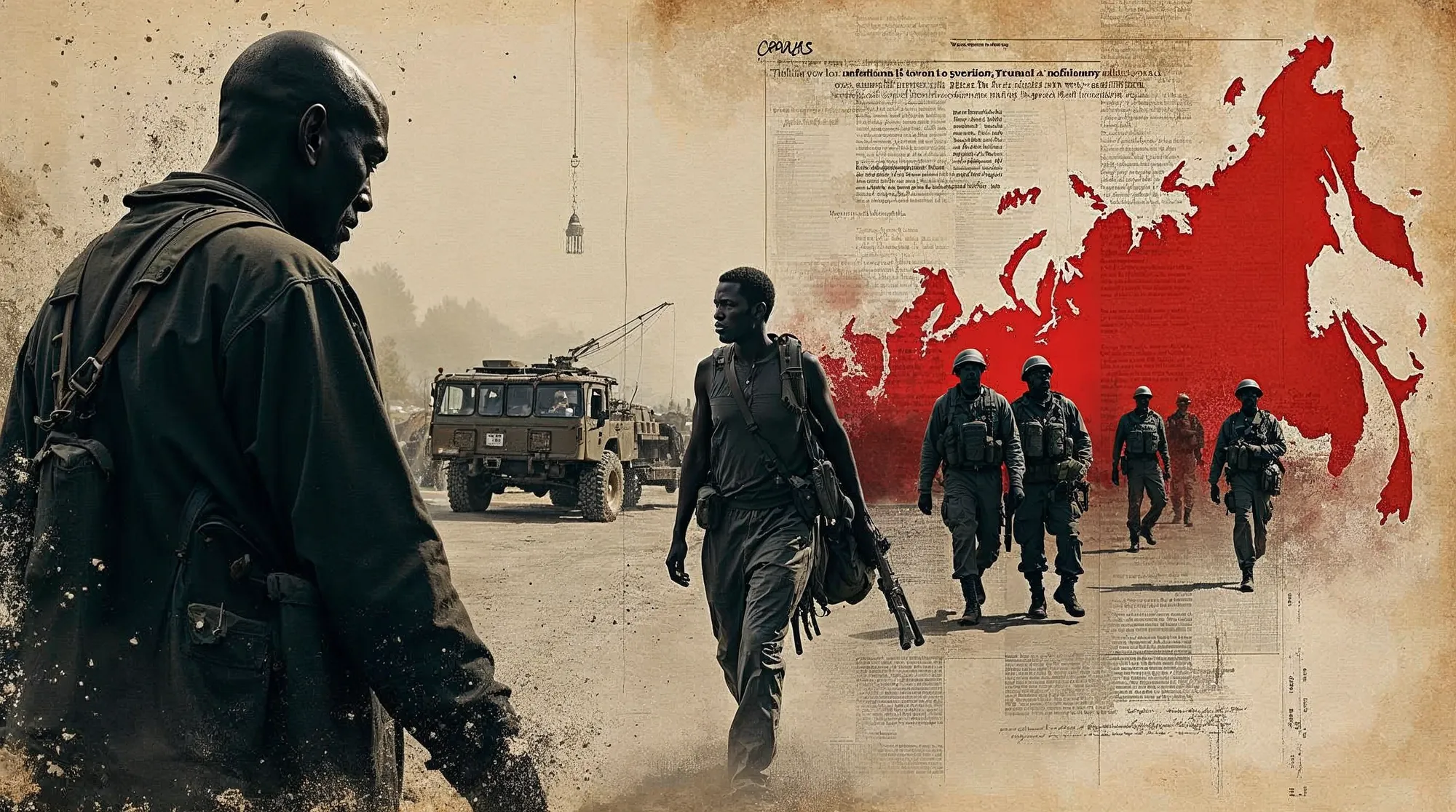
What's really behind the junta's targeting of humanitarian workers? Discover the calculated strategy—from Russian alignment to eliminating oversight of mass atrocities—that transforms aid organizations into convenient scapegoats for military failure.
The humanitarian cost: Operations at risk
The impact of restricting INSO's operations extends far beyond the organization itself. Prior to its suspension, INSO provided critical services to 168 national and international NGOs in Burkina Faso, representing over 8,000 humanitarian staff—90% of whom are Burkinabè nationals. The organization collects information on conflict incidents, security threats, road access, and risks to humanitarian actors, then produces alerts, analysis, and reports distributed free of charge to registered partners.
This information enables NGOs to make life-or-death decisions: whether to delay activities due to active conflict, which routes to avoid, what documentation to carry when traveling, and how to respond if exposed to threats. Without such intelligence, humanitarian operations become significantly more dangerous or simply impossible in many areas.
The timing could not be worse. Burkina Faso faces one of the world's fastest-growing humanitarian crises. The UN Office for the Coordination of Humanitarian Affairs (OCHA) reports that humanitarian needs increased by 35% between 2023 and 2024. For 2025, humanitarian partners are appealing for approximately $410 million to address needs in the wider Sahel, with Burkina Faso as a major focus. Yet funding remains critically low—only 32% of the required $409.7 million had been raised by mid-2024, forcing aid agencies to drastically reduce assistance.
The consequences of underfunding are severe. Over 212,000 refugees and asylum-seekers in Burkina Faso, Mali, and Niger are not yet registered, limiting their access to essential services and heightening risks of arbitrary detention and harassment. Nearly 15,000 schools had closed in the region by mid-2025, along with more than 900 health facilities. In Burkina Faso specifically, over 5,000 schools were closed as of December 2024, affecting more than 800,000 children. Widespread health facility closures due to instability have left millions of people struggling to access essential healthcare services, forcing them to travel long distances to find medical treatment—if they can access it at all.
Food insecurity has reached alarming levels. According to the World Food Programme, 27% of Burkina Faso's population remains moderately food insecure, with 4% severely food insecure—rates that climb higher in conflict-affected areas. The Famine Early Warning Systems Network warned in December 2023 that ongoing blockades could lead to famine or famine-like conditions in parts of the country if humanitarian aid is not allowed through. According to UN OCHA's Lean Season Response Sector Update, the number of people requiring emergency food assistance during the 2024 lean season reached 4.8 million—significantly more than initially anticipated and reflecting the accelerating humanitarian crisis.
The blockades imposed by armed groups represent a particularly dire humanitarian challenge. Approximately 1.1 million people live in 29 to 46 locations (estimates vary) under siege by JNIM and other armed groups, cut off from food, medical supplies, and other essentials. The city of Djibo in northern Burkina Faso has been under blockade since February 2022, with armed groups controlling access routes and preventing the entry and exit of people and goods. On July 17, 2024, armed groups attacked Djibo, damaging health structures, a water distribution site, and a communications tower, while looting and burning a warehouse containing food and supplies.
In October 2024, Médecins Sans Frontières (MSF) announced a temporary suspension of its activities in Djibo following recurrent incidents targeting health centers, water distribution points, and their facilities and staff. This suspension worsened an already dire situation, as MSF was providing critical healthcare services in the region. The organization had been one of the few maintaining operations in the besieged city.
International response: Calls for immediate release
Human Rights Watch has led international calls for the immediate release of the INSO workers. "The Burkina Faso government's detention of eight aid workers amid a humanitarian crisis sends a chilling message that aid groups operate at the whim of a junta that seems to have little concern for people in need," said Ilaria Allegrozzi, senior Sahel researcher at Human Rights Watch. "The authorities should immediately drop all charges against INSO workers, release them, and allow humanitarian groups to operate freely and safely."
Allegrozzi emphasized that "the charges against the eight INSO workers misrepresent the group's crucial work allowing humanitarian organizations to operate safely. Targeting aid workers risks hindering the delivery of life-saving assistance to people desperately in need."
Under international humanitarian law, warring parties are prohibited from harassing, intimidating, and arbitrarily detaining humanitarian relief personnel. The arbitrary detention of INSO workers fits into what Human Rights Watch describes as "a wider pattern of government action against domestic and international nongovernmental organizations" occurring "at a time when civic space in Burkina Faso has been shrinking."
The European Union has also expressed concern, though its response has been complicated by broader challenges in the Sahel. Following the collapse of nearly a decade of European security cooperation after ties with military rulers broke down, the EU is struggling to chart a pragmatic course that reconciles its interests with political realities on the ground. In September 2024, European Commission President Ursula von der Leyen charged EU foreign policy chief Kaja Kallas with developing a "renewed approach" to the Sahel, citing "the growing risks of insecurity and instability in the region."
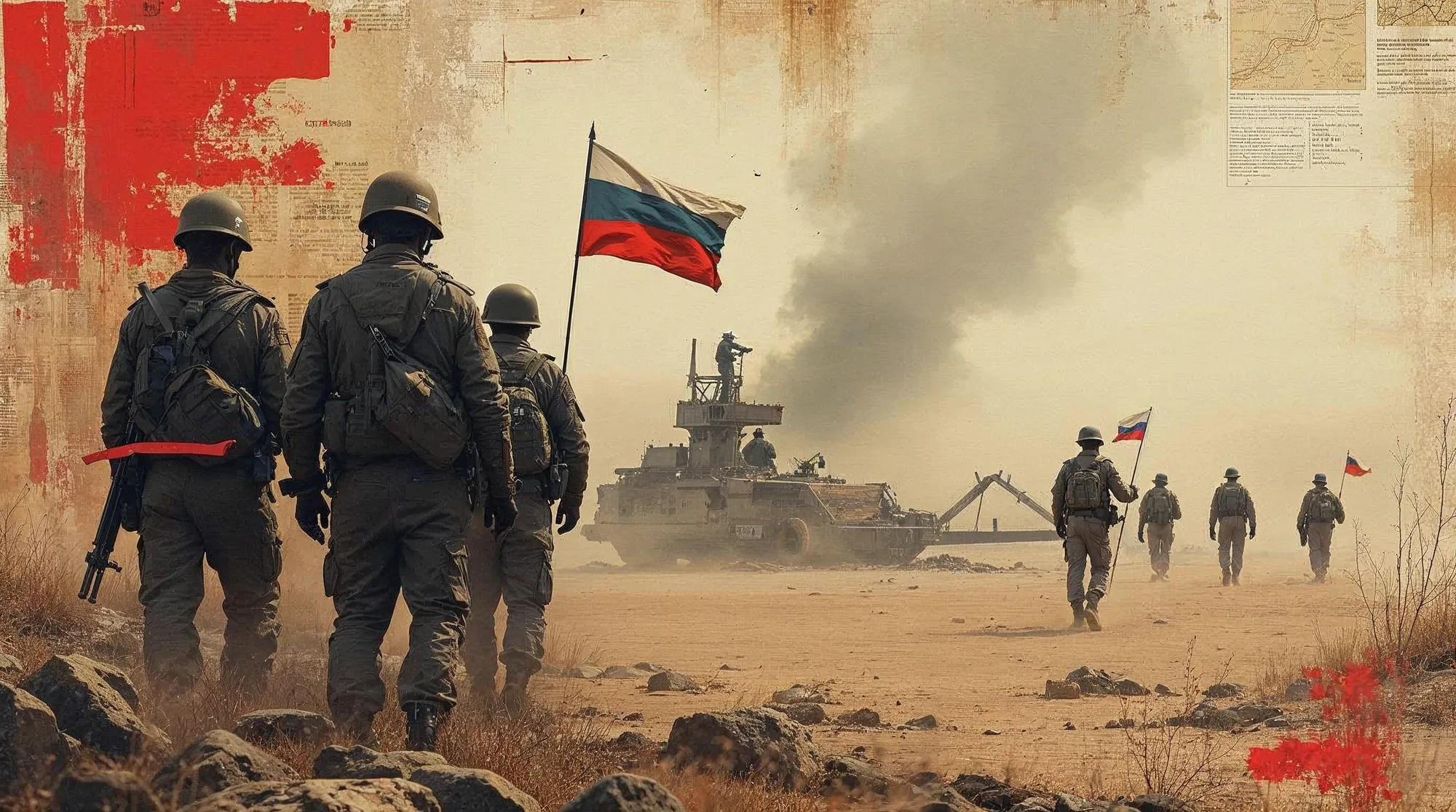
Russia replaces France. ECOWAS collapses. War crimes mount. Discover how three military juntas are rewriting the Sahel's power structure—and why Western humanitarian organizations may be the next casualty of this geopolitical earthquake.
A region in crisis: The broader Sahel context
Burkina Faso's humanitarian emergency is part of a wider crisis affecting the entire Sahel region. According to UNHCR, about 4 million people are now displaced across Burkina Faso, Mali, Niger, and neighboring countries—around two-thirds more than five years ago. This displacement reflects insecurity, limited access to services and livelihoods, and the effects of climate change.
Women and children represent 80% of forcibly displaced people in the Sahel. The insecurity across the region is exposing people to violence, forced recruitment, movement restrictions, and arbitrary detention. Gender-based violence has significantly increased, according to UNHCR's regional director for West and Central Africa, Abdouraouf Gnon-Konde.
The conflict has devastated education and healthcare systems across the region. Nearly 15,000 schools had closed by mid-2025, along with more than 900 health facilities. More than 212,000 refugees and asylum-seekers in Burkina Faso, Mali, and Niger are not yet registered, limiting their access to essential services.
Climate change compounds these challenges. The Sahel is experiencing rising average temperatures, with climate models projecting temperature increases of 2.0 to 4.3°C by 2080 depending on emissions scenarios, placing enormous pressure on populations where the majority rely on rain-fed agriculture for their livelihoods. Rainfall patterns are becoming increasingly variable and extreme, with some models projecting more intense wet and dry periods, though overall trends remain uncertain. These climate impacts severely test the resilience of the approximately 60% or more of the Sahel population who depend on rain-fed agriculture.
Agricultural productivity has been significantly affected by climate-related events. Studies indicate that climate change in Burkina Faso has caused yield declines in major crops, with millet yields falling by 10-20% and sorghum by 5-15% in various regions. While some areas have experienced more severe impacts, documented yield declines generally range from 10-35% depending on crop type and location, representing a serious threat to food security and livelihoods across northern Burkina Faso.
A deadly heatwave in the Sahel and West Africa through March and April 2025 saw maximum temperatures in Burkina Faso 1.5ºC hotter than average during the day and 2ºC hotter at night. Scientists called this a once-every-200-years event that can be expected to become more frequent.
Armed groups linked to al-Qaeda and the Islamic State control large swaths of territory across the region. In Burkina Faso, JNIM and the Islamic State-Sahel Province have intensified attacks. Between January and August 2024, Islamist armed groups killed 1,004 civilians in 259 attacks, according to ACLED. Several attacks targeted communities that had joined the VDP, civilian auxiliaries of the Burkinabè armed forces.
On August 24, 2024, JNIM fighters attacked hundreds of civilians working on the construction of a defensive trench outside the town of Barsalogho in the Center-North region, killing at least 133 people, including dozens of women and children, and injuring at least 200 more. On June 11, alleged JNIM fighters attacked Sindo town in the Hauts-Bassins region, killing at least 20 civilian men in apparent retaliation against the local community for joining the VDP.
The humanitarian funding gap remains critical. In 2025, UNHCR requires $409.7 million to cover humanitarian needs in Sahel countries but has only raised 32% of this total. Critical activities including registration, documentation, education, health, and shelter have been drastically impacted.
Looking ahead: An uncertain future for humanitarian access
The detention of INSO workers represents a critical juncture for humanitarian operations in Burkina Faso and potentially across the Sahel. If the military junta proceeds with prosecuting aid workers on espionage charges, it will establish a dangerous precedent that could further restrict humanitarian access at precisely the moment when needs are greatest.
The international community faces difficult choices. Maintaining pressure on the junta to release the INSO workers and allow humanitarian operations is essential, but leverage is limited. The military governments have shown they are willing to accept isolation from Western partners and regional organizations in pursuit of their sovereignist agenda. Russia's support provides an alternative source of military assistance and political backing, reducing the effectiveness of Western pressure.
For humanitarian organizations, the calculus is stark. Withdrawing from Burkina Faso would abandon 6.3 million people in need, including 3.4 million children, to a worsening crisis. Yet continuing operations without adequate security information, in an environment where aid workers face detention on espionage charges, puts staff at unacceptable risk.
The situation demands creative approaches. Strengthening local civil society organizations and community-based responses may provide pathways for assistance that are less vulnerable to accusations of foreign interference. Increased support for regional organizations and neighboring countries hosting refugees could help address needs indirectly. Quiet diplomacy through countries that maintain relations with the military governments—such as Algeria, despite recent tensions—might create space for humanitarian access.
The broader question is whether the international community can develop a coherent strategy for the Sahel that addresses both immediate humanitarian needs and the underlying drivers of crisis: poor governance, underdevelopment, climate change, and the proliferation of armed groups. The current trajectory—military governments aligned with Russia, crackdowns on civil society, deteriorating security, and shrinking humanitarian space—suggests the crisis will deepen before it improves.
For the 6.3 million people in Burkina Faso who need humanitarian assistance, the detention of eight aid workers is more than a diplomatic incident. It is a signal that the systems designed to protect and assist them are breaking down, even as their needs grow more desperate. Whether those systems can be rebuilt, or whether new approaches can be found, will determine the fate of millions across the Sahel in the years ahead.


